




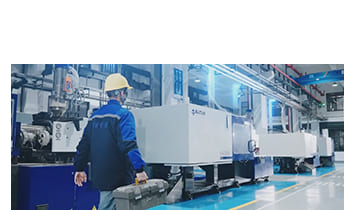


射出成形用の温度制御ユニット(TCU)とは何ですか?

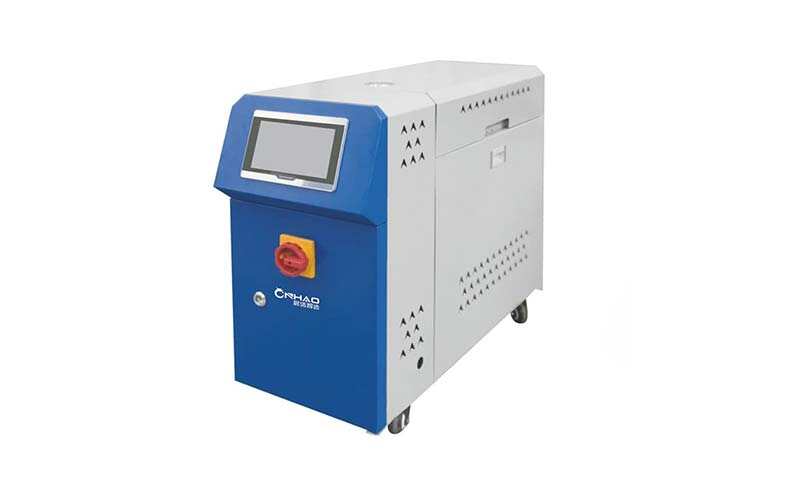
射出成形用の温度制御ユニット(TCU)とは何ですか?
That little metal box on casters, plumbed to your mold, quietly holding the steel at exactly the right temperature so your parts come out right every shot. Most people call it a mold temperature controller. The rest of the industry calls it a TCU. Here is what it actually does, how it works, and the one thing almost nobody checks until it’s too late.
I was in a plant outside Guangzhou, watching a run of thin-wall caps come out of a press with a subtle white streak along the gate, and the operator was pulling his hair out. The process sheet said the mold should be at 40 degrees. The machine was running. The resin was dry. Everything looked fine. Then he opened up the line to the mold and put his hand on the return hose, and you could feel it in a second: the water coming back was barely warm, and the flow was pathetic.
The unit was running. The display showed 40 degrees. But the water was crawling through the cooling channels like syrup on a cold morning, and a layer of scale had built up inside the lines until the flow was a fraction of what it should have been. The steel wasn’t actually at 40 degrees at the cavity surface. It was hotter in places, cooler in others, and every part that came out carried the evidence.
That little metal box — a temperature control unit、または TCU for short — gets blamed when parts are bad and ignored when they’re good. This guide is about what it really is, how it works, and why the details of water flow matter more than the number on the display.
What a temperature control unit actually is
A temperature control unit (TCU) is a device that regulates the temperature of a mold, die, or process within a narrow range. In injection molding, that means circulating a heat-transfer fluid through the cooling (or heating) channels in the steel, and using a pump, a heater, and a cooling system to keep the fluid at the set temperature.
The name is worth pausing on, because it trips people up. A TCU is not just a heater, and it’s not just a cooler. It does both. If the mold needs to be at 120°C — which it does for engineering resins like nylon or polycarbonate — the TCU heats the fluid up to reach that. If the mold runs hot because resin is being injected into it all day, the TCU takes heat away. Same box, two jobs.
You’ll hear this piece of equipment called a few different things: a 金型温度調節器, a temperature controller for injection molding, or just a TCU. They all point to the same class of machine. “Mold temperature controller” is the term most molders use on the floor; “temperature control unit” is the formal name. If you’re talking to a supplier and want to make sure they know exactly what you mean, either works.
TCU vs. chiller: not the same machine
This confusion costs people money, so let me clear it up early.
A chiller mechanically removes heat — it’s basically a refrigerator for your water. It gives you a cold, constant supply of water at, say, 10°C, and it can’t heat anything. If your process needs cold water and cold water only, you need a chiller, not a TCU.
A TCU can go up as well as down. It heats its own fluid and it cools it, so it can hold a mold at exactly 40°C, or 90°C, or 150°C — wherever the process wants it — regardless of whether that’s warmer or colder than the plant’s ambient water.
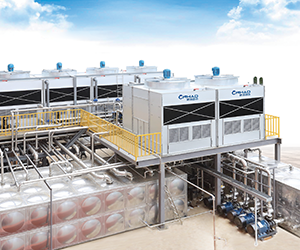
In practice, most plants run both. The industrial water chiller provides the cold source, and the TCU takes that chilled water and delivers it to the mold at the precise temperature the process demands. If you’re running a central chiller plant, each press or each mold will typically have its own TCU on top of that cold source. The chiller is the utility; the TCU is the precise delivery.
How a temperature control unit works
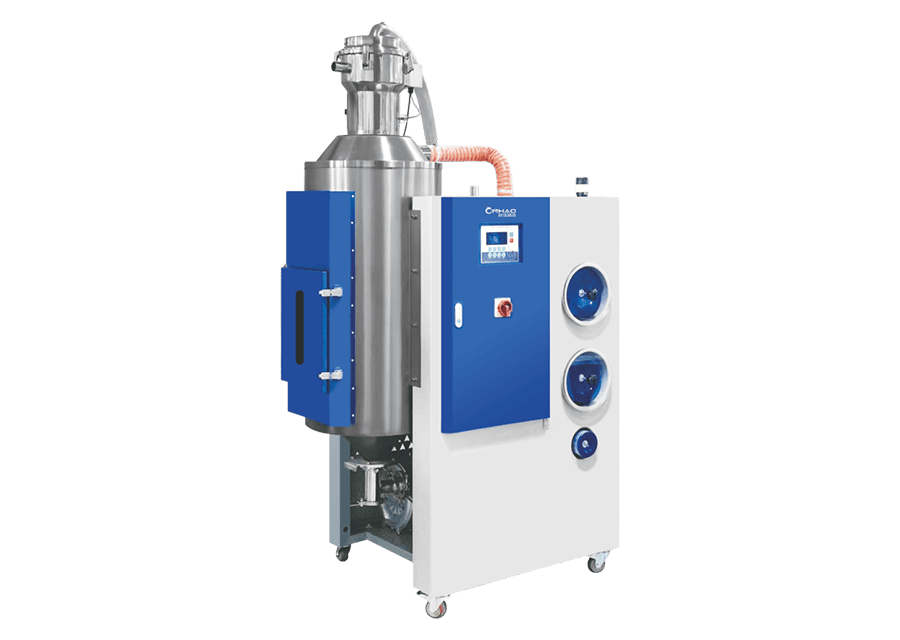
Strip away the casing and every TCU has the same four working parts:
- A pump that circulates the fluid — water, or a thermal fluid for high-temperature work — through the mold and back.
- An electric heater that brings the fluid up to temperature when you’re starting a cold mold, and tops it up as the mold bleeds heat.
- A precision controller that compares the returning fluid temperature to the set point and decides whether to heat or cool.
- A cooling system — a valve, or a heat exchanger — that dumps heat when the mold runs hot.
Here’s the mental model that helps. The fluid leaves the TCU toward the mold at your set temperature. It picks up heat from the injected polymer as it travels through the cooling channels, comes back warmer, and the controller looks at the return temperature. Too hot? Open the cooling valve or run the heat exchanger. Too cold? Fire the heater. The goal is to keep the fluid arriving at the mold at a constant temperature, shot after shot.
What that temperature should be depends on the resin. Commodity plastics like polyolefins are often cooled in the 21–27°C range. Engineering materials like nylon and polycarbonate may want the mold held at 38–93°C, which means the TCU is doing real heating work, not just holding a mold cool. Get the number wrong in either direction and you pay for it in quality.
If you want the full picture on why that precision matters and what it costs when you lose it, our guide on why precise mold temperature control is critical for quality digs into the surface-finish, dimensional, and cycle-time consequences in detail.
Three ways a TCU is plumbed, and why it matters
Not all TCUs cool the same way, and the difference quietly determines what a unit can handle. There are three basic circuit designs.
Direct-injection (or open) circuit. The simplest design. The TCU draws from the same water supply — a chiller, a cooling tower — and pumps it to the mold. When the mold runs hot, a valve opens and injects cold water straight into the loop; excess warm water flows back out to the tower or chiller. Simple, cheap, and fine for most commodity jobs, but it tops out around 121°C.
Closed circuit. This design uses a brazed-plate heat exchanger to cool the process water, rather than dumping in cold water. Because the process fluid and the cooling water are separated, this handles more demanding cooling loads and can run a bit hotter — up to about 148°C. If you’re cooling a mold with a heavy heat load or you need a more stable process loop, this is usually the better choice.
Isolated circuit. The process fluid and the cooling water are completely separate, with their own heat exchanger between them. You need this if your process fluid is something like a thermal transfer fluid or an ethylene-glycol mix that must never mix with the cooling water. The trade-off is that open-to-atmosphere cooling circuits top out lower, around 82°C, and these units are built for very specific, high-end jobs.
For most standard injection molding, the direct-injection and closed-circuit designs cover the vast majority of what you’ll see. Which one you need comes down to how hot you’re running, how heavy the heat load is, and whether the process fluid can tolerate being mixed with the cooling supply.
The part everyone skips: turbulent flow
Here’s where I earn my keep. A TCU can hold the water at the perfect temperature, and you can still have terrible cooling. The reason is something called turbulent flow, and it’s the detail that separates a properly cooled mold from one that’s quietly costing you money.
Here’s the physics in plain language. When water flows through a cooling channel in the mold, only the water that actually touches the channel wall transfers heat. If the water is moving slowly and smoothly — what engineers call laminar flow — it travels in neat, separate layers. The outer layers touch the wall and pick up heat, but they act like insulation around the inner layers, which never get close to the steel. Result: poor heat transfer, uneven mold temperature, and a TCU that reads perfectly while the mold cooks or chills unevenly underneath.
Speed the water up enough and you cross into turbulent flow, where the fluid churns and tumbles. Now the whole volume of water gets thrown against the channel walls, heat transfer jumps dramatically, and the mold stays even. Engineers quantify this with a number called the Reynolds number; turbulent flow generally starts above about 4000. Below that, you’re in laminar territory and leaving cooling performance on the table.
This is exactly the failure I opened with. That operator’s display showed the right temperature, but the scaled-up lines had dropped the flow so low the water was laminar (if it was moving at all), and the mold steel was nowhere near where the display claimed. The TCU wasn’t lying — it just couldn’t fix a flow problem on the other side of a clogged channel.
So when someone tells you their mold runs hot no matter what the TCU says, the first thing worth checking isn’t the controller. It’s whether you’re actually getting turbulent flow through every cooling circuit — which means checking flow rate, channel diameter, water temperature, and the condition of the lines.
Water type or oil type?
If you’ve been shopping, you’ve seen two flavors: water-type and oil-type TCUs. The difference is the fluid and what temperature it can reach.
Water-type TCUs are the workhorse. Water transfers heat better than oil and is cheap and safe to handle, so water units cover most molding work up to about 90–120°C, depending on whether the system is pressurized. If your parts are polyolefins, commodity engineering resins, or anything that doesn’t need a scorching-hot mold, water is almost always the right, efficient choice.
Oil-type TCUs step in when you need the mold hotter than water can practically go — typically above 120–150°C, sometimes more. They use a thermal oil that won’t boil, so they can hold high mold temperatures steadily. The trade-offs are slower heat-up, worse heat transfer than water, and the fact that you’re dealing with hot oil, which brings safety and maintenance concerns. You pay for the high-temperature capability.
The decision between the two is really a decision about your highest mold-temperature requirement. Our dedicated guide to water vs. oil mold temperature controllers walks through the temperature ranges, operating costs, and typical applications so you can match the fluid to your process instead of guessing.
Choosing a TCU without getting lost
Once you know a TCU is what you need, the buying decision comes down to a handful of numbers, and I won’t overload you here — this article is about understanding the machine, not the full selection process.
- Temperature range you need. This decides water vs. oil more than anything else. Know your hottest mold requirement first.
- Pump flow and pressure. You need enough flow to hit turbulent conditions through the mold’s cooling channels, and enough pressure to overcome the resistance of hoses and fittings. Don’t size this to “what looks normal” — size it to flow.
- Heater capacity. Bigger molds of steel or aluminum take more energy and more time to bring up to temperature. Match the heater to your mold’s mass and your acceptable heat-up time.
- Cooling capacity. This has to handle the resin heat load — and remember the pump itself adds heat too. If you run hot runners, add cooling tonnage for them.
The full step-by-step — calculating resin loads, sizing the pump and heater, picking between single-zone and multi-zone units — is in our mold temperature controller selection guide. The honest summary is that most people under-size the pump and over-size the heater, and the pump is the one you’ll regret.
Frequently asked questions
Q1: What is a TCU in injection molding?
A temperature control unit (TCU) regulates the temperature of the mold by circulating fluid through its cooling channels with a pump, heater, and cooling system. It can both heat and cool, holding the steel at a precise set temperature to keep part quality consistent.
Q2: What’s the difference between a mold temperature controller and a TCU?
Nothing, functionally. “Mold temperature controller” is the common term molders use; “temperature control unit” (TCU) is the more formal name. They describe the same machine. Suppliers may use TCU to emphasize it’s a complete unit with pump and heater.
Q3: Do I need a chiller or a temperature control unit?
It depends on whether you need to heat or just cool. A chiller only cools and gives you a constant cold-water supply. A TCU can both heat and cool, so it can hold a mold at whatever temperature the process wants. Many plants use a chiller as the cold source and a TCU on each mold for precise control.
Q4: Why is turbulent flow important in a TCU?
Only the fluid touching the cooling channel wall transfers heat. In slow, laminar flow, the outer layers insulate the inner ones and heat transfer is poor. Turbulent flow churns the fluid so the whole volume contacts the wall, maximizing heat transfer and keeping the mold temperature even. Flow needs to be fast enough to stay turbulent.
Q5: What temperature does a water-type TCU reach?
Water-type units typically handle up to about 90–120°C, depending on the design and whether the system is pressurized. Above that, an oil-type TCU using a thermal fluid is needed to reach the higher mold temperatures safely.
Q6: Why does my mold run hot even though the TCU shows the right temperature?
The display reads the fluid temperature, not the mold steel. If flow has dropped — from scale buildup, a clogged channel, or an undersized pump — you may be in laminar flow and the steel isn’t actually at the set temperature. Check flow rate and line condition before blaming the controller.
Final thoughts
A temperature control unit is unglamorous in the best way. It sits there holding the mold at the right temperature, shot after shot, and nobody thinks about it until a run comes out bad. But it is doing one of the most important jobs on the floor, because mold temperature is baked into the quality of every part you make.
The lesson I keep coming back to is the one from that plant outside Guangzhou: the number on the display is not the temperature of the steel. A TCU can be running perfectly and still not do its job if the water isn’t flowing hard enough to actually pull heat out of the mold. Understand what the machine is doing, respect the flow, and keep the channels clean — and that little metal box will quietly earn its keep for years.
If you’re early in the buying process, start with the selection guide to nail down your numbers. If you already own TCUs and parts are giving you trouble, don’t assume the machine is broken — check the flow first. Nine times out of ten, it’s the water.
Related reading:
Mold temperature controller selection guide — the full step-by-step on sizing and choosing.
Water vs. oil mold temperature controllers — which fluid fits your process.
Why precise mold temperature control is critical — what inconsistent mold temperature costs you.
Industrial water chiller guide — the cold source your TCUs depend on.
Central chiller plant — running many TCUs off one chilled-water system.