




Why Precise Mold Temperature Controller Is Critical for Injection Molding Quality

Introduction
In injection molding, mold temperature is far more than a simple process parameter — it is one of the most influential factors determining part quality, cycle time, and production consistency. A deviation of just a few degrees can mean the difference between a perfect part and a rejected batch. Mold temperature controllers, often referred to as thermoregulators or TCUs (Temperature Control Units), are the unsung heroes of the molding floor, quietly ensuring that every shot meets specification. Understanding how to select, configure, and maintain these units can dramatically improve your production outcomes.
What Is a Mold Temperature Controller?
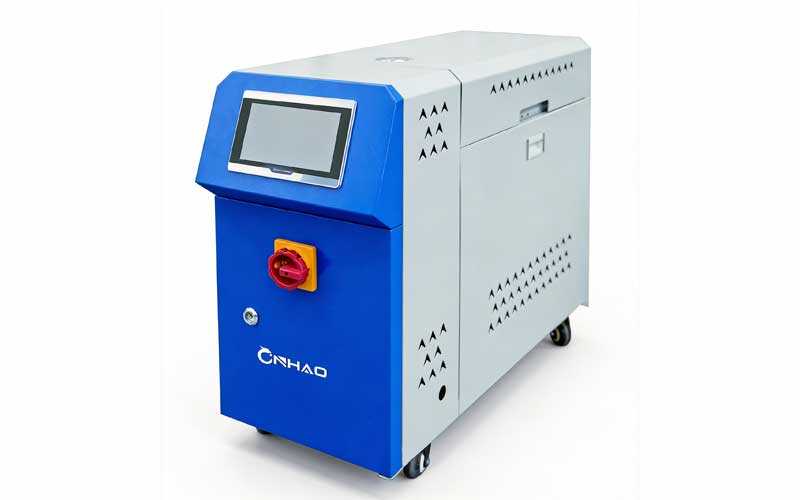
A mold temperature controller is a precision device that circulates a heat transfer fluid — typically water or thermal oil — through the cooling channels of an injection mold at a precisely regulated temperature. The unit heats or cools the fluid as needed to maintain the setpoint, compensating for the heat introduced by the molten plastic during each injection cycle. Modern TCUs can maintain temperature stability within ±0.1°C, making them essential for high-precision applications.
Water-Type vs. Oil-Type Temperature Controllers
Water-type mold temperature controllers are the most common choice for applications up to approximately 120°C. They offer excellent heat transfer efficiency, fast response times, and lower operating costs. For higher temperature applications — typically 120°C to 300°C — oil-type units are required. Thermal oil has a higher boiling point and better thermal stability at elevated temperatures, making it suitable for engineering plastics such as PEEK, PPS, and high-temperature nylons that require mold temperatures well above the boiling point of water.
Direct Cooling vs. Indirect Cooling
Direct cooling systems circulate the heat transfer fluid directly through the mold channels, offering the fastest thermal response and highest efficiency. Indirect cooling uses a heat exchanger to separate the mold circuit from the TCU circuit, providing an additional layer of contamination protection and making it easier to switch between different heat transfer fluids. The choice depends on the cleanliness requirements of the application and the specific thermal characteristics needed.
How Mold Temperature Affects Part Quality
Surface Finish and Appearance
Mold surface temperature directly influences the replication of the mold cavity surface on the finished part. Higher mold temperatures allow the polymer melt to flow more easily into microscopic surface details, producing glossier finishes and more accurate texture reproduction. When mold temperature is too low, the melt skin solidifies prematurely, resulting in dull surfaces, flow marks, and visible weld lines. For high-gloss cosmetic parts and textured surfaces, precise temperature control is non-negotiable.
Dimensional Stability and Warpage
Uneven mold temperature distribution is one of the primary causes of part warpage. When different areas of the mold operate at different temperatures, the plastic cools and shrinks at different rates, creating internal stresses that distort the final part. A well-designed temperature control system with multiple independently controlled circuits ensures uniform cooling across the entire mold surface. This is particularly critical for large, thin-walled parts and components with tight dimensional tolerances.
Crystallinity and Mechanical Properties
For semi-crystalline polymers such as polypropylene, nylon, and PBT, the mold temperature determines the degree of crystallinity in the finished part. Higher mold temperatures allow more time for polymer chains to organize into crystalline structures, resulting in improved strength, stiffness, and chemical resistance. Too low a mold temperature quenches the polymer into an amorphous state, compromising mechanical performance. Each polymer grade has an optimal mold temperature range that balances crystallinity with cycle time efficiency.
Optimizing Cycle Time Through Temperature Management
The cooling phase typically accounts for 60% to 80% of the total injection molding cycle, making it the largest opportunity for productivity improvement. A common misconception is that colder mold temperatures always mean faster cycles. In reality, the goal is to maintain the optimal temperature that allows the part to solidify quickly without introducing defects. Modern TCUs with PID control algorithms can rapidly respond to thermal load changes, maintaining temperature stability even as production speeds vary. This consistent thermal environment allows for predictable, repeatable cycle times that maximize throughput without sacrificing quality.
Energy Efficiency in Mold Temperature Control
Traditional mold temperature controllers operate continuously, consuming energy even during idle periods. Modern units incorporate several energy-saving features that can reduce power consumption by 30% or more. Variable-speed pumps adjust flow rates based on actual cooling demand rather than running at full capacity constantly. Adaptive control algorithms learn the thermal characteristics of each mold and optimize heating and cooling cycles accordingly. Some advanced systems also feature heat recovery capabilities, capturing waste heat from the cooling circuit and redirecting it for other plant operations such as material drying or space heating.
Selecting the Right Temperature Controller for Your Application
Choosing the appropriate mold temperature controller requires evaluating several key parameters. The heating capacity, measured in kilowatts, must be sufficient to raise the mold from ambient to operating temperature within an acceptable warm-up time and maintain that temperature against the cooling effect of the circulation fluid. Pump flow rate and pressure determine how effectively the heat transfer fluid circulates through the mold channels — insufficient flow leads to temperature gradients and hot spots. For multi-zone applications, individual circuit control allows different areas of complex molds to operate at different temperatures, enabling precise optimization of filling patterns and cooling rates.
Conclusion
Mold temperature control is a precision science that directly impacts every critical quality metric in injection molding — from surface finish and dimensional accuracy to mechanical strength and cycle time. Investing in high-quality temperature controllers with advanced control features is not merely an equipment upgrade but a strategic decision that affects product quality, production efficiency, and ultimately customer satisfaction. As injection molding continues to demand tighter tolerances and higher consistency, the role of precise thermal management will only grow in importance. Processors who master mold temperature control gain a measurable competitive advantage in today’s demanding manufacturing landscape.