




מערכת הזנה מרכזית חכמה ליציקת פלסטיק בהזרקת לחץ: מדריך מקיף

מערכת הזנה מרכזית חכמה ליציקת פלסטיק בהזרקת לחץ: מדריך מקיף
מערכת הזנה מרכזית קובעת למעשה אם המפעל שלכם פועל בצורה נקייה, עקבית ורווחית — או מבזבז שעות בכל שבוע על טיפול בחומרים, זיהום וייבוש לא אחיד. להלן הסבר על אופן הפעולה של מערכת הזנה מרכזית חכמה ועל הגורמים שיש לקחת בחשבון לפני שתשקיעו בה.
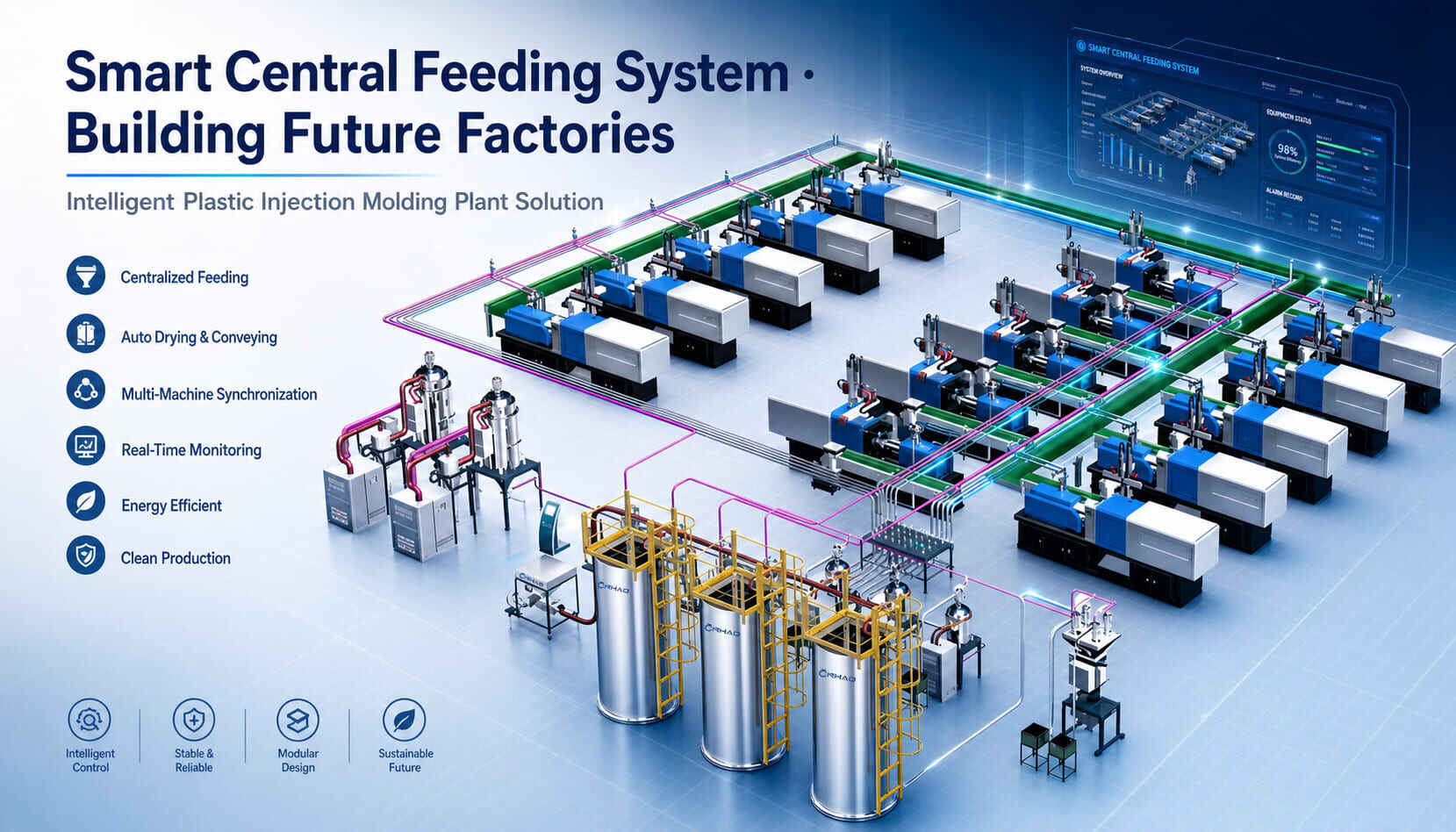
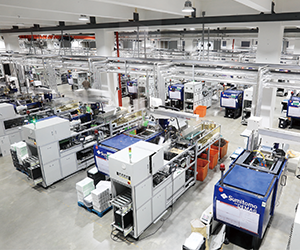
אם אי פעם הסתובבתם במפעל לייצור הזרקת פלסטיק וראיתם שקיות של חומר גלם מוערמות ליד הקירות, מייבשים ניידים המזמזמים לצד כל מכבש, ומפעילים המעבירים חומר ממקום למקום בעזרת עגלות, כבר נתקלתם בבעיה. העבודה אמנם מתבצעת, אך היא איטית, מאובקת, וקל לטעות בה. טעינה אחת לא נכונה של חומר גלם עלולה להרוס סדרת ייצור שלמה.
א מערכת הזנה מרכזית — המכונה גם מערכת הזנה מרכזית, מערכת הובלה מרכזית, או מערכת מרכזית לטיפול בחומרים — פותרת את הבעיה הזו על ידי העברת חומרי הגלם מאזור אחסון ועיבוד מרכזי לכל מכונה באמצעות רשת צינורות אטומה. הגרסה החכמה כוללת חיישנים, בקר מרכזי ושקיפות נתונים, כך שהמפעל מתנהל באופן עצמאי בזמן שאתם צופים בו מהמסך.
העניין הוא כזה: הזנה מרכזית אינה רק עניין של נוחות. היא משפיעה באופן ישיר על איכות החלקים, שיעור הפסולת, צריכת האנרגיה וכמות כוח האדם הנדרשת להעברת החומר. בתעשיית היציקה התחרותית, זה חשוב לא פחות מהמכונה עצמה.
מהי מערכת הזנה מרכזית חכמה?
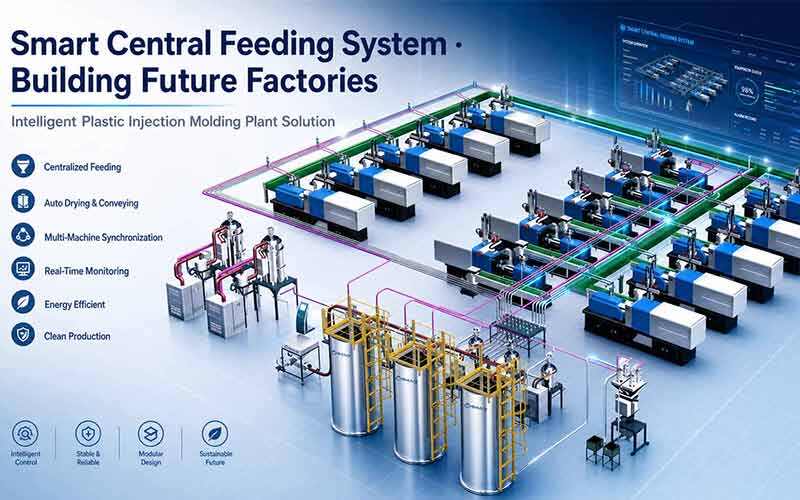
בבסיסה, מערכת הזנה מרכזית חכמה היא רשת אספקה אוטומטית של חומרים למפעל פלסטיק. גרגרים או אבקות מאוחסנים בממגורות בתפזורת או במכלים מרכזיים, מיובשים ומותאמים לרמת הלחות הנכונה, מעורבבים לפי הצורך, ולאחר מכן מועברים לפי דרישה לכל מכונת הזרקה, קו אקסטרוזיה או תחנת ניפוח.
החלק ה"חכם" נובע משכבת הבקרה. בקר לוגי מתוכנת (PLC) או מחשב תעשייתי מפקחים על רמות החומר, נקודות הטל במייבש, לחץ ההובלה ומצב הקו. המפעילים בוחרים מתכונים מממשק HMI, והמערכת פותחת את השסתומים הנכונים, מפעילה את המשאבות הנכונות ומתעדת מה הועבר לאן. כאשר מתרחשת סטייה כלשהי — מחסור בחומר, קו חסום, לחות גבוהה — המערכת מפעילה אזעקה לפני שהפסולת מתחילה להצטבר.
שישה יתרונות שמשנים את אופן הפעולה של המפעל
כל ספק של מערכות הזנה מרכזיות מבטיח יעילות, אך היתרונות האמיתיים באים לידי ביטוי במפעל בשש דרכים ספציפיות:
האכלה מרכזית
מרכז אחסון וטיפול אחד משרת מכונות רבות. החומר עובר בצינורות אטומים במקום בשקים, במיכלים ובמלגזות החוצות את רצפת הייצור.
ייבוש והובלה אוטומטיים
השרפים נשמרים ברמת הלחות והטמפרטורה הרצויות, החל מהמייבשים המרכזיים ועד לפתח המכונה. לא עוד ייבוש לא אחיד מהיחידות המותקנות בצד המכונה.
סנכרון בין מספר מכונות
הבקר מתאם את הביקוש בכל הקווים, כך שהמשאבות פועלות ביעילות ואף מכונה לא נותרת ללא אספקה בעוד אחרת מקבלת אספקה עודפת.
ניטור בזמן אמת
לוחות המחוונים מציגים את צריכת החומרים, את מצב המייבש, את ההתראות ואת ניצולת הציוד. הבעיות מתגלות עוד לפני שהן הופכות ליקרות.
חסכוני באנרגיה
משאבות ואקום משותפות, מחזורי הובלה מיטביים ומייבשי נקודת טל הניתנים לכוונון מפחיתים את צריכת החשמל בהשוואה לצי של מטענים עצמאיים ומייבשים.
ייצור נקי
צינורות סגורים מונעים חדירת אבק, זיהום ולחות. הרצפה נשארת נקייה יותר, והסיכוי לפגמים בחלקים הבולטים לעין פוחת משמעותית.
מרכיבים מרכזיים ואופן פעולתם המשותפת
מערכת הזנה מרכזית חכמה טובה רק במידה שהאינטגרציה בין מרכיביה טובה. להלן התהליך האופייני:
- ממגורות בתפזורת או מיכלי אחסון חיצוניים מאחסנים כמויות גדולות של שרף הרחק מאזור הייצור. כך הם מפנים מקום ומצמצמים את תדירות הצורך בהעברת החומר באופן ידני.
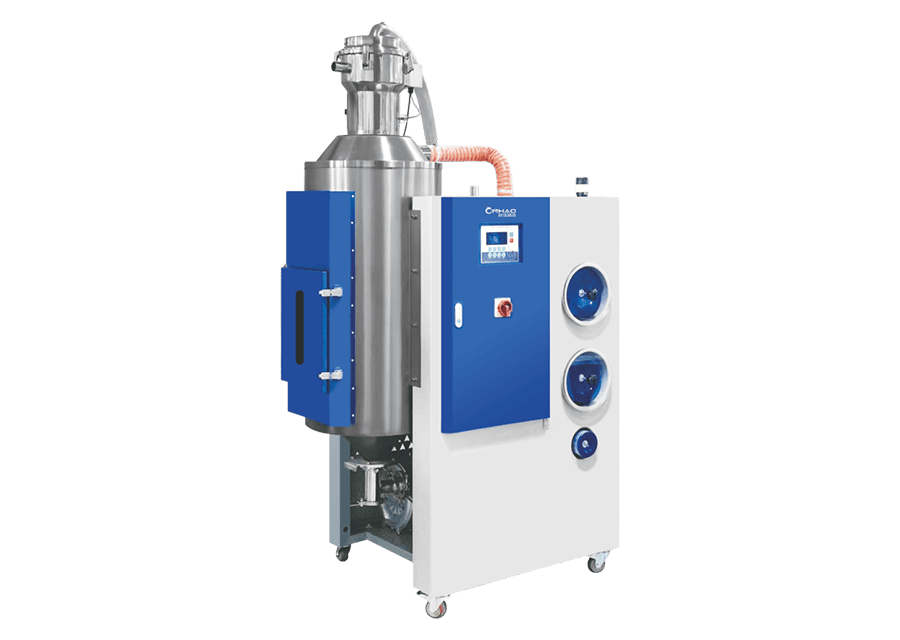
- מייבשי אוויר מרכזיים להסיר לחות משרפים היגרוסקופיים כגון ABS, PC, PA ו-PET. נקודת טל יציבה — לרוב -40°C או פחות — מונעת התפשטות, בועות וקווי חיבור חלשים.
- בלנדרים ויחידות מינון מטר תערובת צבע, תוספים או חומר טחון מחדש לתוך חומר הגלם בדיוק רב. דגמי "אובדן משקל" יכולים להגיע לדיוק של חלקי אחוז.
- משאבות ואקום ומכלים ליצור לחץ שלילי כדי לשאוב את החומר דרך צינורות מפלדת אל-חלד או צינורות אנטי-סטטיים אל כל מכונה.
- סעפות ושסתומים אוטומטיים להעביר את החומר המתאים למכונה הנכונה. קווים המסומנים בצבעים שונים ומנגנוני נעילה בתוכנה מונעים זיהום צולב.
- PLC/HMI וחיישנים להפעיל את לוח הזמנים, לפקח על רמות ועל לחץ, לתעד התראות, ובאופן אופציונלי לשלוח נתונים למערכות MES או ERP.
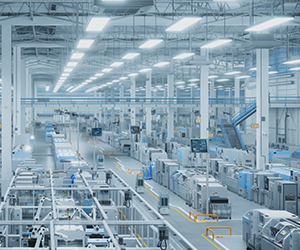
התוצאה היא מעגל: אחסון → טיפול → הובלה → מכונה → נתוני צריכה → חזרה לתכנון. כאשר המערכת פועלת כראוי, המפעילים מפסיקים "לשמור" על החומר ומתחילים לנהל את הייצור.
היכן שמערכת הזנה מרכזית מספקת את הערך הרב ביותר
אמנם כל מפעל שיש בו יותר מכמה מכונות יכול להפיק תועלת מכך, אך התמורה היא הגדולה ביותר במצבים הבאים:
- יציקה בהזרקה: מינון עקבי של לחות וצבע משפר את איכות החלקים הקוסמטיים, מפחית את מספר היציאות הקצרות ומייצב את זמני המחזור.
- אקסטרוזיה: קווי ייצור רציפים של יריעות, צינורות, לוחות ופרופילים זקוקים לחומר גלם מאוזן ללא הפרעות, כדי למנוע תנודות בעובי ועצירות בקו הייצור.
- Blow molding: Bottle and container production relies on steady resin quality and color consistency across long runs.
- Multi-material operations: Plants running many resins or frequent color changes gain the most from automated line routing and purge control.
How to choose and size a central feeding system
Buying the right system means thinking about material, layout, and growth before you think about hardware brands. Use this checklist:
- Map your materials. Pellets, powders, and regrinds behave differently. Note which resins are hygroscopic, which need dosing, and which cannot share lines.
- Calculate total and peak demand. Size receivers, pumps, and dryers for simultaneous machine demand, plus a safety margin for changeovers and future lines.
- Plan pipe routing carefully. Longer runs and sharp elbows reduce conveying efficiency and create angel hair. Use gentle sweeps, proper diameter, and accessible cleanouts.
- Match dryer specs to resin. ABS, PC, PA, and PET have different drying temperatures, dew points, and residence times. A mismatch here guarantees defects.
- Build in line identification and safety locks. Physical color-coding plus software permissions prevent the wrong resin from reaching the wrong machine.
- Choose controls that scale. A good HMI should show alarms, consumption, and trend data. MES/ERP integration becomes valuable once you have multiple lines.
- Leave room to grow. A manifold-based design makes it much easier to add machines later without rebuilding the whole network.
הטעות שאני רואה הכי הרבה: Plants size the system for average demand and forget about peak changeovers. When three machines switch colors at once, the conveying load spikes. If the pump and receiver capacity are too small, machines wait for material and cycle times slip.
Common mistakes that waste a central feeding investment
- Undersized dryers. If residence time or dew point is wrong, defects continue no matter how nice the pipeline looks.
- Poor line cleaning strategy. Color changes without automatic purging waste hours and create contamination risk.
- Ignoring material segregation. Virgin, regrind, and color runs need clear routing rules and physical locks.
- Sharp bends and long vertical lifts. These starve lines, increase angel hair, and wear pipes faster.
- No pilot zone. Layout realities — vibration, heat, access — show up only when the system runs. Test one area before full rollout.
ROI and maintenance reality
A well-designed central feeding system is not cheap. A mid-size installation often falls in the USD 50,000–200,000 range depending on machine count, materials, and controls. But the payback usually comes from three places:
- Less scrap: Consistent drying and dosing cut moisture-related and color-related defects. Moving from 6–8% scrap to under 2% pays for a lot of equipment.
- Lower labor: Fewer operators spend time moving bags, loading hoppers, and watching dryers.
- Better floor use and energy: Shared pumps and central dryers are typically more efficient than a scattered collection of machine-side units.
Many plants see payback within one to three years. With routine maintenance — quarterly pump checks, semi-annual filter and valve service, and annual pipe and sensor audits — a system can run for 15 to 20 years.
שאלות נפוצות
Q1: What is the difference between a central feeding system and a central conveying system?
The terms overlap. A מערכת הזנה מרכזית usually refers to the full solution including storage, drying, blending, and distribution. A מערכת הובלה מרכזית focuses more narrowly on moving material through pipelines. When suppliers say “central material handling system,” they typically mean the integrated plant-wide solution.
Q2: Can one system handle powders and pellets?
Yes, but not always in the same line. Powders need lower conveying velocities, better filtration, and often separate lines to avoid buildup and dusting.
Q3: How many machines can one central feeding system support?
Small systems serve 5–10 machines; large installations serve 50 or more. The limit is usually pump capacity, pipe sizing, and how cleanly you can separate materials.
Q4: Is a smart central feeding system worth it for a small plant?
If you run only one or two machines, standalone loaders and dryers may be more practical. Once you pass about five machines — or run many materials and colors — centralization becomes hard to ignore.
Q5: How does it connect to MES or ERP?
The PLC/HMI can share material consumption, batch data, and alarms over Ethernet. That enables lot traceability, automated reordering, and better production planning.
קריאה נוספת:
How to choose an industrial water chiller for efficient process cooling.
Choosing a PET drying system — dew point, time and crystallization explained.
Turnkey plastic auxiliary systems for complete plant equipment.
קריאה נוספת:
How to choose an industrial water chiller for efficient process cooling.
Choosing a PET drying system — dew point, time and crystallization explained.
Turnkey plastic auxiliary systems for complete plant equipment.
מחשבות סיכום
A smart central feeding system is one of those investments that changes the character of a plant. The floor gets cleaner, the material gets more consistent, and the people who used to push carts and watch hoppers can focus on making good parts.
The key is to treat it as a plant system, not a collection of boxes. Size it for peak demand, plan the pipe routes like you would plan electrical or water lines, and build in controls that can grow with you. Do that, and a smart central feeding system stops being an expense and becomes the backbone of a modern, efficient molding operation.