Central Feeding System

Automated, centralized material conveying and control for plastics processing — enabling uninterrupted, unmanned molding operations across your entire factory floor.

Request a Quote

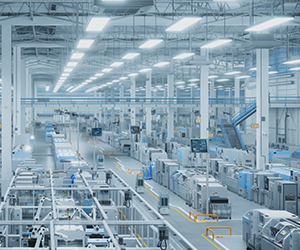
[ Image Placeholder — Central Feeding System Overview ]
Recommended: Full system layout showing silos, piping, pump station, and machine receivers (1200×600px)

What Is a Central Feeding System?

A central feeding system is a fully automated material handling solution designed for plastics processing facilities. It centralizes the storage, drying, conveying, dosing, and distribution of plastic resin — delivering the right material to the right machine at the right time, all controlled from a single interface.

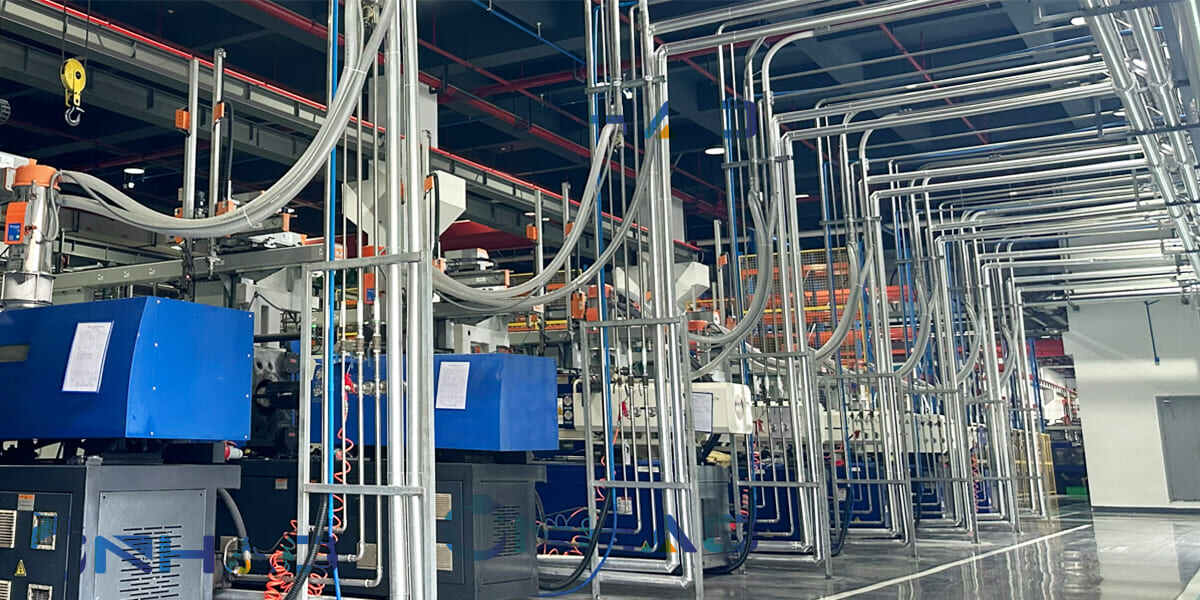
Instead of individual loaders on each machine, a central vacuum pump station pulls resin from bulk storage (silos, bulk bags, or bins) through a sealed piping network to material receivers mounted on each processing machine. This enables 24-hour continuous, unmanned production with significant reductions in labor, energy, and material waste.

Streamline Eco Tech designs and manufactures complete central feeding system solutions for injection molding, blow molding, and extrusion facilities, supporting 10 to 50+ machines from a single central system.

Core System Components

[ Image: Vacuum Pump Station ]

Central Vacuum Pump Station

VFD-controlled multi-pump configuration with automatic standby/recovery. Delivers consistent vacuum pressure across the entire pipeline network while optimizing energy consumption.

[ Image: Material Receiver ]

Material Receivers

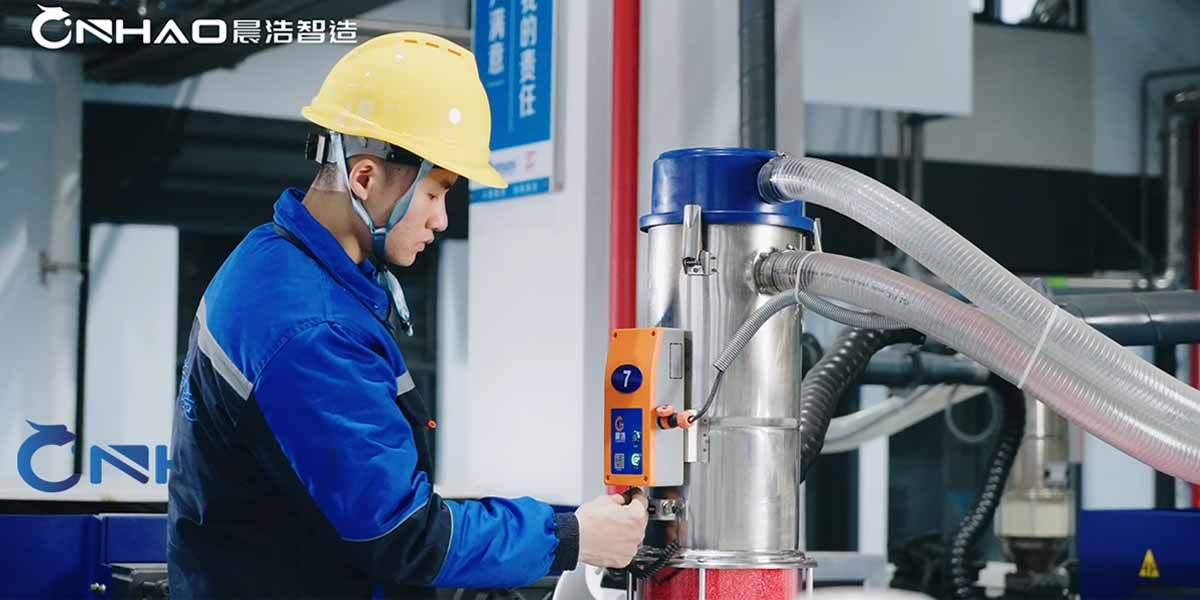
Stainless steel vacuum receivers mounted on each machine, equipped with level sensors for automatic demand-based material delivery. Available in 3L to 60L capacities.

[ Image: Piping Network ]

Piping Network

Stainless steel or aluminum pipe system with long-radius bends and quick-disconnect joints. “One machine, one pipe” design prevents cross-contamination and material mixing.

[ Image: Control Panel ]

Central Control System

PLC-based central control with touchscreen HMI. Real-time monitoring of material flow, pipeline pressure, alarm status, and machine demand. Supports MES/ERP integration.

[ Image: Dust Collection ]

Dust Collection & Filtration

Centralized dust extraction with multi-stage filtration. Keeps the production environment clean, prevents material contamination, and complies with workplace air quality standards.

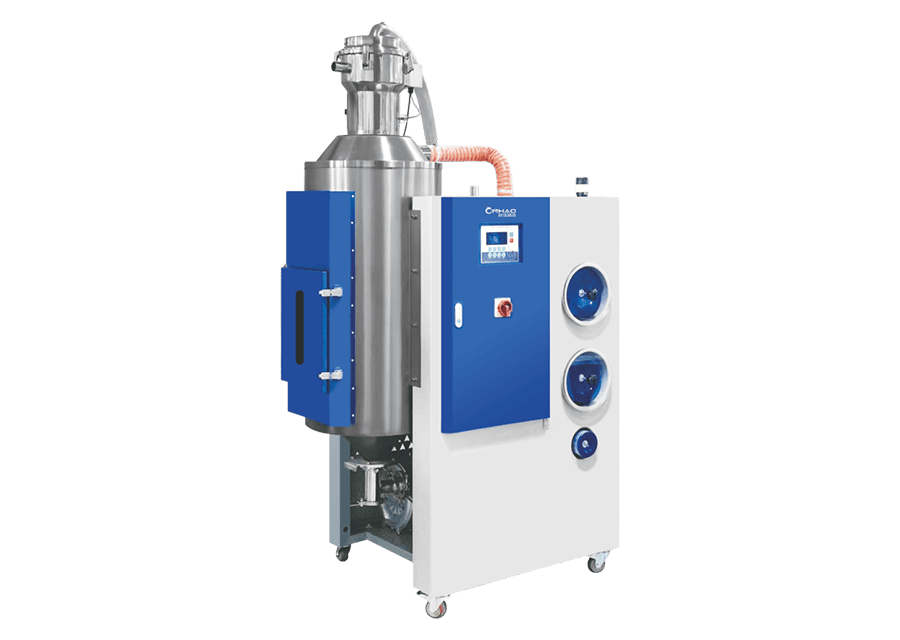
[ Image: Drying Integration ]

Integrated Drying & Dosing

Optional integration with dehumidifying dryers, gravimetric blenders, and volumetric dosers for a complete material preparation pipeline from storage to machine throat.

How a Central Feeding System Works

01

Storage

Resin stored in silos, bulk bags, or bins

02

Vacuum Conveying

Central pump pulls material through sealed pipes

03

Drying (Optional)

Material passes through dehumidifying dryer

04

Dosage et mélange

Precise ratio mixing of virgin, color, regrind

05

Machine Delivery

Receiver on each machine feeds on demand

[ Image Placeholder — System Process Flow Diagram ]
Recommended: Visual flow diagram showing material path from silo to machine (1200×400px)

Key Advantages

70% Labor Reduction

Eliminate manual material handling, bag lifting, and machine-side loading. One operator can manage the entire material supply for 50+ machines from a central control panel.

30-50% Energy Savings

VFD-controlled central pumps use significantly less energy than individual loaders on every machine. Shared infrastructure reduces overall power consumption.

Zero Contamination

Fully sealed pipeline system prevents dust ingress, moisture absorption, and cross-contamination. Material purity is maintained from storage to machine throat.

5-10% Material Savings

Reduced material leakage, dust loss, and spillage. Precise dosing and blending minimize waste. Closed-loop regrind feeding recycles runners and sprues automatically.

24/7 Unmanned Operation

Automatic material replenishment enables continuous production runs without operator intervention. Ideal for lights-out manufacturing and weekend production.

Industry 4.0 Ready

Real-time data monitoring, remote diagnostics, and predictive maintenance alerts. PLC supports OPC UA, Modbus, and MES/ERP system integration for smart factory setups.

Integrated System Solution

A Streamline Eco Tech central feeding system is not just a conveyor — it is a complete, integrated plant-wide material management platform. Our solution covers five interconnected subsystems:

1

Material Handling System

Vacuum conveying, storage, and distribution

2

Circulating Water System

Cooling water distribution for molds and equipment

3

Séchage et déshumidification

Honeycomb/desiccant dryers for hygroscopic resins

4

Automation Control

PLC central control with MES/ERP integration

5

Digital Production Floor

Real-time monitoring, data analytics, traceability

[ Image Placeholder — Integrated Plant-Wide System Diagram ]
Recommended: 5-subsystem integration overview showing all connected modules (1200×500px)

Technical Specifications

Parameter Specification Notes
Supported Machines 10 to 50+ injection/extrusion/blow machines Scalable modular design
Conveying Distance Up to 200 meters Depends on pipe diameter and pump capacity
Conveying Capacity 300 to 5,000 kg/h per line Configurable based on material and distance
Pump Type VFD-controlled roots vacuum pump Energy-efficient with auto standby
Pipe Material Stainless steel 304 / Aluminum Food-grade 316 optional
Control System Siemens PLC with 15″ touchscreen HMI Supports OPC UA, Modbus TCP
Material Compatibility Pellets, granules, regrind, powder PP, PE, PET, PVC, ABS, PC, PA, PS
Filtration Multi-stage HEPA + pulse-jet cleaning Automatic filter regeneration
Power Supply 380V/50Hz or 460V/60Hz Customizable by region
Certification CE, ISO 9001 UL available upon request

Applications & Industries

Injection Molding

Multi-machine workshops producing automotive parts, consumer electronics, medical devices, and packaging components.

Extrusion

Pipe, profile, sheet, and film extrusion lines requiring continuous material supply with consistent quality.

Blow Molding

Bottle and container production with multi-material feeding, regrind recycling, and color change capabilities.

Compounding

Precise multi-component dosing for polymer blends, masterbatches, and filled compounds with gravimetric accuracy.

[ Image Placeholder — Real Installation Photos ]
Recommended: Factory installation photos showing piping, pump station, and control panel (1200×600px)

Central Feeding System vs. Individual Machine Loaders

Comparison Central Feeding System Individual Machine Loaders
Labor 1 operator for entire plant 1 loader per machine, manual refill
Energy Use 30-50% lower (shared VFD pump) Each machine has its own motor
Material Waste 5-10% savings (sealed system) Higher spillage and dust loss
Contamination Risk Near zero (closed pipeline) Open hoppers, dust exposure
Scalability Add machines without new loaders Each new machine needs a loader
Data & Monitoring Centralized real-time monitoring Isolated, no plant-wide visibility
Initial Investment Higher (infrastructure) Lower per machine
Long-term ROI 12-24 months typical payback Higher operating costs over time

Frequently Asked Questions

How many machines can a central feeding system support?

A single central feeding system can support 10 to 50+ processing machines, depending on pump capacity, pipe layout, and material types. The modular design allows future expansion — additional machines can be added without replacing the central pump station.

Can the system handle multiple materials simultaneously?

Yes. The “one machine, one pipe” design means each machine has a dedicated material line. The central control system manages routing so that different machines can receive different materials (virgin, regrind, masterbatch) at the same time without cross-contamination.

How long does installation take?

Typical installation takes 2-4 weeks depending on plant size and complexity. This includes pipe routing, pump station setup, receiver installation, control panel wiring, and system commissioning. We provide on-site installation supervision and operator training.

Does the system integrate with existing dryers and blenders?

Yes. The central feeding system is designed to work with our dehumidifying dryers, gravimetric blenders, and temperature control units. It can also integrate with most third-party auxiliary equipment via standard industrial communication protocols.

What is the typical return on investment?

Most customers see a 12-24 month payback period through labor savings (70% reduction), energy savings (30-50%), and material waste reduction (5-10%). Facilities running 24/7 production with high material throughput typically see the fastest ROI.

Do you provide custom system design for my factory layout?

Absolutely. Every central feeding system is custom-engineered based on your factory floor plan, machine arrangement, material types, and production volume. We provide 3D layout designs, pipe routing plans, and equipment specifications as part of our turnkey plant planning service.

Ready to Automate Your Material Handling?

Get a custom central feeding system design tailored to your factory layout, material types, and production capacity. Free consultation and 3D layout proposal.

Request a Free Consultation

Explore Related Equipment & Solutions