





Plastic Vacuum Loaders: The Smallest Machine That Stops Production the Most

Plastic Vacuum Loaders: The Smallest Machine That Stops Production the Most
It’s the cheapest piece of auxiliary equipment on your floor — and the one that gets blamed for downtime more than anything else. Here’s what ten years taught me about picking an automatic material loader that actually keeps running.
I’ve lost count of how many emergency calls started the same way. The operator says the machine stopped feeding. The part looks fine — a stainless hopper, a little motor on top, a vacuum hose snaking off to the dryer. Everyone treats the vacuum loader like it’s a light switch: it either works or it doesn’t, and when it doesn’t, nobody knows why.
Here’s the uncomfortable truth. After a decade of commissioning plants and chasing these things across injection molding floors, I can tell you that a cheap automatic material loader fails more often than any dryer or temperature controller you’ll ever buy. Not because it’s poorly made — because people pick it for the price and forget it does actual work. A vacuum loader cycles thousands of times a shift. Treat it like a disposable part and it’ll behave like one.
What a vacuum loader actually does
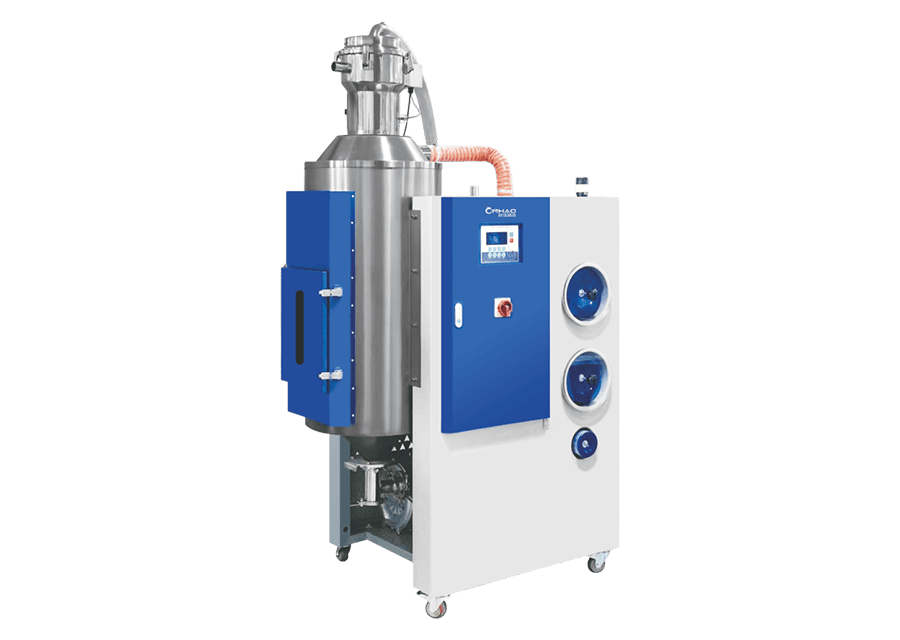
Strip away the marketing and a plastic vacuum loader is dead simple: a vacuum pump pulls material through a hose into a small receiver mounted on top of the machine throat. When the receiver fills, a sensor triggers, the pump shuts off or diverts, and material drops into the hopper. Empty again? The cycle repeats.
That’s it. Weigh nothing, count nothing, just move pellets from A to B. Which is exactly why people underestimate it.
The real skill isn’t in the principle — it’s in the sensing and the seal. The loader has to know when it’s full without overfilling, keep dust inside the receiver instead of all over your floor, and stop cleanly so the hose doesn’t clog. Get those three right and a loader is boring in the best way. Miss one and you’re climbing a ladder with a broom handle every hour.
Here’s the thing: The loader isn’t the weak link because it’s complicated. It’s the weak link because it’s the highest-cycle component on the machine. Every shot needs material. Every material delivery is a mechanical cycle with a seal, a filter, and a sensor that can all wear out.
The three parts that decide whether it survives
When I’m evaluating any loader — ours or a competitor’s — I look at the same three things. Not the wattage, not the pretty plastic housing. These three:
The filter
Every cycle blows fine dust against the filter. A reverse-pulse or self-cleaning filter keeps the vacuum pressure up; a cheap mesh clogs within weeks and the loader starts under-feeding. This is the #1 cause of “it stopped working” that’s actually “the filter gave up.”
The level sensor
The probe that says “full.” Cheap capacitive sensors drift with temperature and material build-up. A probe that misfires means the loader either starves the machine or spills material — and you can’t see which from the control panel.
The seal and lid
A loader can’t pull vacuum through a gap. Warped lids, dried-out gaskets, cracked sight glasses — any one kills conveying distance. On multi-material lines you swap hoppers constantly, and that’s when seals take the most abuse.
Central vacuum vs. single-loader motors
Here’s the fork in the road most buyers hit, and it’s worth getting right the first time because retrofitting is a pain.
You can run one loader per machine, each with its own little motor on top. Simple, independent, and if one dies the rest keep running. The downside — you’ve got a motor vibrating on every press, and every one of them needs its own filter and seal to maintain.
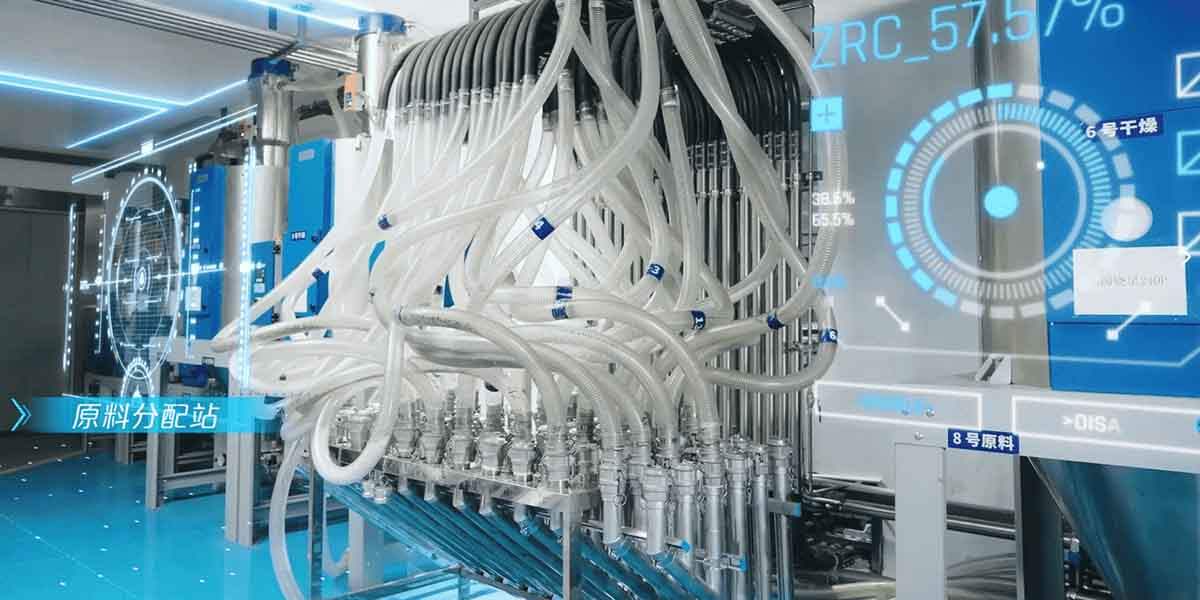
Or you go with a central vacuum conveying system: one big vacuum pump in a corner, a ring of pipes running to receivers on every machine, and a controller that opens one valve at a time. Fewer motors to maintain, quieter floor, and the ability to pull material much farther — some of our runs go 60 to 80 meters.
For a shop running under ten presses, I usually point people to individual loaders. Simpler, cheaper to start, and if you lose one machine’s loader you only lose that machine. Once you’re past a dozen presses and moving material more than twenty meters, a central system stops being a luxury and starts being the only sensible way to run the place. The break-even usually lands somewhere in that range, but I’ve seen shops justify it at six presses just because their floor layout was scattered.
The downtime that nobody blames on the loader
I want to spend a second on the failures that look like they’re caused by something else.
The classic: a machine starts making short shots and the operator swears it’s the injection unit. You check the barrel temperature, the screw back pressure, all of it. Then someone notices the hopper’s been running thin for an hour. The loader was under-feeding the whole time — not because it’s broken, but because the filter clogged overnight and the vacuum pressure dropped just enough that it fills slower than the machine empties.
That’s the insidious one. A loader doesn’t have to fail completely to cost you money. It just has to be slightly too slow, and you’ll chase the ghost for half a shift.
The other one is regrind. If you’re feeding regrind with anything but a loader designed for it, you’re gambling. Regrind is fluffier, dustier, and clogs standard filters fast. A dedicated regrind loader uses a bigger filter and a stronger pulse; using a standard unit, you’ll be cleaning it every shift and wondering why your reclaim rate suddenly looks terrible.
Five minutes a day beats an hour a month
Here’s the maintenance advice I actually give, and it’s boring on purpose:
- Blow out the filter at the start of every shift. Thirty seconds. A clogged filter is the difference between a loader that feeds and one that silently starves the machine.
- Listen to the pump. A loader that’s straining sounds different — higher pitch, more labored. That’s your early warning before the filter gets bad enough to matter.
- Check the hose for wear at the machine end. Pellets are abrasive at speed. A worn-through hose leaks vacuum and sprays dust. Replace it before it fails mid-run.
- Keep a spare sensor and filter on the shelf. They’re cheap, and they’re the two things that die first. Having one on hand turns an hour of downtime into fifteen minutes.
- Clean the receiver properly when you change materials. Leftover masterbatch from the last run will happily contaminate your next one.
So what should you actually buy?
Match the loader to the material, not the machine. A standard automatic material loader handles clean pellets fine. Throw powder, regrind, or anything dusty at it and you need the version with the bigger filter and the self-cleaning pulse. Same brand, different animal.
Match the conveying distance to reality. A loader rated for eight meters that you’re pushing over fifteen will under-fill forever. Measure your actual run, add a couple meters of margin, and buy accordingly. Oversizing the vacuum source costs a little upfront and saves you a lifetime of frustration.
And match the controller to your operator. A simple PLC with a handful of recipes is worth more than a touchscreen with fifty screens nobody uses. In a real shop, the guy setting it up is busy, and he doesn’t want to read a manual to change from one material to another. If changing a recipe takes more than a minute, you’ve bought the wrong loader.
Bottom line: A vacuum loader is not the piece of equipment you should be cheap about. It’s the one running every cycle, every minute, on every press. Spend a little more on the filter, the sensor, and the seal — and your operators will stop climbing ladders, and your production won’t stop for a part that costs less than a pair of safety boots.