





Injection Molding Automation: Guide to Going Lights-Out

Injection Molding Automation: A Practical Guide to Going Lights-Out
I remember the first time a customer told me they wanted a “fully automated injection molding line.” We had just walked past a row of machines running with one operator per two presses. “We want to get to one operator per ten,” he said, “or none at all at night.”
That’s the real question behind almost every automation inquiry I get. It’s rarely about buying a robot for its own sake. It’s about cutting labor, running the night shift unattended, and making scrap someone has to catch. Injection molding automation sounds like one big investment, but it’s really a series of smaller decisions — each one with a clear return. This guide walks through what actually moves the needle on a shop floor, in the order I’d look at it.
What Does “Injection Molding Automation” Actually Cover?
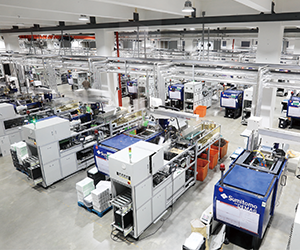
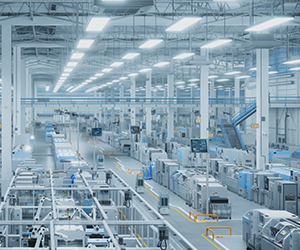
People hear “automation” and picture a robot arm picking parts. That’s the visible tip. In practice, a modern automated injection molding operation bundles several systems that talk to each other:
- Part handling — take-out robots and manipulators that extract parts and sprues
- Material feeding — vacuum loaders, hoppers, and central conveying that move resin automatically
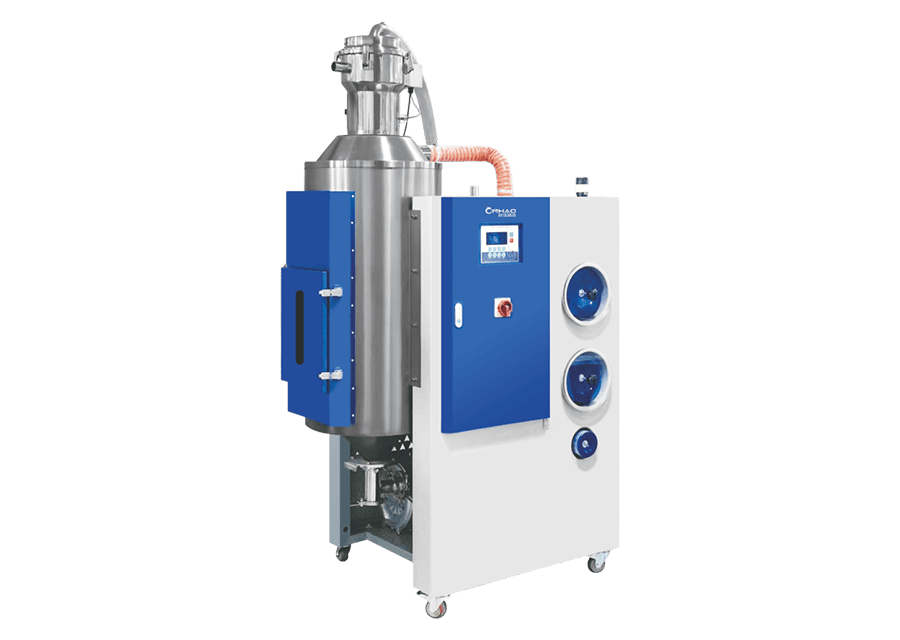
- Drying and dosing — resin dryers and gravimetric blenders that prep material without a person weighing masterbatch
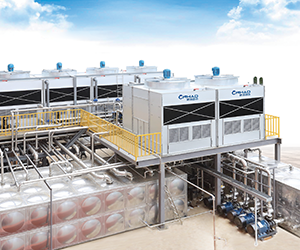
- Mold temperature control — mold temperature controllers and chillers that keep cycles consistent
- Granulating and reclaim — in-house grinders that turn sprues and scrap back into usable material
- Monitoring and control — the software layer that watches all of it
The useful way to think about it: automation is the point where your press stops waiting on a person. Material shows up when the machine wants it. The part comes out and gets handled. The scrap goes back in. The mold stays at the right temperature. That’s it.
Why Molders Automate: The Real Business Case
Automation isn’t a fashion choice. There are three drivers that actually justify the spend, and almost every project I’ve seen fits one of them.
| Driver | What it looks like on the floor | Where the money comes back |
|---|---|---|
| Labor | One operator runs 8-10 presses instead of 1-2 | Payroll shrinks; one person can supervise a bay |
| Consistency | Every cycle runs at the same time and temperature | Fewer rejects, less rework, happier customers |
| Lights-out running | Machines keep running after the last shift leaves | Capacity without adding a night crew |
The mistake I see most often is automating the flashy part first — the robot — before the boring parts that actually make lights-out possible. A robot pulling parts doesn’t help much if someone still has to hand-feed a dryer every hour or chase a jammed loader. The order of operations matters, and I’ll get to that in a minute.
Where to Start: Material Handling Before the Robot
If you only automate one thing, most molders should start with 物料搬运, not the robot arm. Here’s why: resin feeding is the task that quietly consumes the most operator time, and it’s also the easiest to make fully automatic.
A plastic vacuum loader moves pellets from a drum or central silo straight to the machine’s hopper. Set up right, nobody touches material all shift. When you step up to a smart central feeding system, one conveying line can distribute several resins to many presses, each machine asking for what it needs when it needs it.
This is the foundation. A plant where material arrives automatically is already 60% of the way to running with minimal people. Robots are easier to justify once the presses aren’t starved of resin.
Take-Out Robots and Manipulators: The Part Everyone Notices
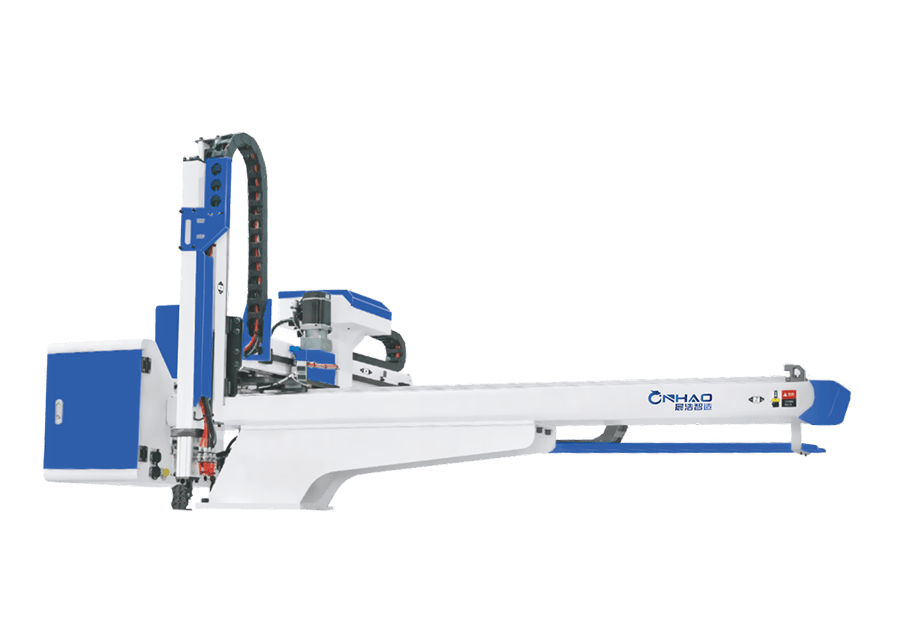
The take-out manipulator is the workhorse of part extraction. After the mold opens, it reaches in, grabs the part (and often the sprue), and sets it down on a conveyor or stacker — freeing the operator and keeping the cycle time consistent.
Two terms come up a lot, and people mix them up:
- Traverse robots run on a rail above the machine and can reach further, handle heavier parts, and do more than simple extraction.
- Manipulators are typically simpler, mounted units built for the core job of pulling the part out.
For many part geometries, a manipulator is enough and costs less. You add a full traverse robot when parts are heavy, cycles are tight, or you want the arm to do secondary operations like trimming or stacking.
Automated Drying, Dosing, and Mold Temperature
Three support systems quietly decide whether automation actually works. If any of them needs a human every hour, you don’t have lights-out — you have an expensive robot waiting for someone.
Drying. Hygroscopic resins like PET, nylon, and ABS must be dried to the right moisture level before molding. An automatic dehumidifying dryer with a dew point controller does this on its own, alerting you only when something’s off. A central drying system handles several machines from one point.
Dosing and blending. Color and additive ratios need to stay identical shot after shot. A 称重式混合机 weighs each ingredient, so it corrects itself when pellets flow unevenly — something no operator mixing by hand can match.
Mold temperature. A 模具温度控制器 keeps the steel at a set temperature cycle after cycle. Consistent mold temperature is what makes automated parts come out the same every time. Skip this, and your “automated” line produces parts with wandering dimensions.
Scrap and Sprues: Closing the Loop Automatically
A fully automated line shouldn’t produce a pile of sprues someone has to haul away. In-house granulators and crushers grind runners, sprues, and reject parts back into regrind that can be re-fed — ideally automatically, alongside virgin resin through a metered blender.
This is where automation pays off twice: you save the labor of handling scrap, and you cut raw material cost because the material isn’t leaving as waste.
A Realistic Automation Roadmap (What to Do in What Order)
Here’s the sequence I suggest, because it stacks return on top of return and keeps any one investment from sitting idle:
- Fix the basics first. Mold temperature control and drying must be stable before anything else. Automating a line that’s not consistent just makes bad parts faster.
- Automate material feeding. Central conveying and vacuum loaders. Remove the daily manual resin handling.
- Add dosing and reclaim. Gravimetric blending plus in-house granulation, so ratios are exact and scrap returns automatically.
- Add part extraction. Manipulators first, traverse robots where parts demand it.
- Layer on monitoring. Software that watches the line and alerts you — including overnight.
That order means the expensive robot is the last thing you buy, and by then the supporting systems are ready to let it actually run unattended.
How Much Does Injection Molding Automation Cost?
There’s no honest single number, because “automation” can mean a $5,000 manipulator or a multi-million-dollar line. But you can budget it in layers:
- Single manipulator: modest, and often the first rung
- Machine-side conveying + drying: low- to mid-range, big labor savings
- Central system with a few presses: the meaningful step, where you start to see lights-out
- Fully integrated bay: the largest, justified by throughput and labor over years
The practical test isn’t the sticker price — it’s the payback. If automating a task removes half a shift of labor or lets you run overnight, do the math on that, not on the invoice.
Frequently Asked Questions About Injection Molding Automation
Can injection molding run “lights-out” with no operators?
Yes, but only when every support system is automatic and monitored. Material feeding, drying, mold temperature, scrap reclaim, and part extraction all have to run without intervention — and something has to alert you when a fault happens overnight. It’s an achievable goal, not a gimmick, but it’s earned in steps.
Is a robot worth it for a small job shop?
Often not as the first purchase. For low-volume, mixed runs, a manipulator for part extraction plus automatic conveying usually gives better value. Robots earn their keep on longer, more consistent runs.
What’s the difference between a manipulator and a robot?
A 操纵器 is a simpler, mounted unit focused on extracting the part from the mold. A traverse robot runs on an overhead rail, reaches further, handles more weight, and can do secondary operations. Start with the simpler tool unless parts demand more.
Does automation actually improve part quality?
It removes the biggest variable — the human. Consistent material, temperature, and timing produce more consistent parts. Automation doesn’t fix a bad mold, but it stops the day-to-day drift that causes rejects.
How long does it take to see a return?
Material-handling automation often pays back fastest, sometimes within months through labor saved. Larger integrated systems are typically justified over one to three years. The key is automating the right tasks first.
Bottom Line
Injection molding automation isn’t one machine. It’s the sum of small, individually sensible decisions — material that feeds itself, resin that’s dry and blended correctly, a mold that stays at the right temperature, scrap that returns automatically, and a robot that handles the part when it comes out. Start with the foundation, add extraction when it makes sense, and measure payback against labor and scrap, not against the invoice.
If you’re planning an automated line and want to talk through which systems to sequence first, our guides on central feeding systems, industrial water chillers,以及 plastic auxiliary equipment are a good place to start mapping your own plant.