




Plastic Auxiliary Equipment: The Complete Guide for Manufacturers (2026)

Plastic Auxiliary Equipment: The Complete Guide for Manufacturers (2026)
Plastic auxiliary equipment is the backbone of every profitable injection molding plant — yet most manufacturers treat it as an afterthought, buying whatever dryer or chiller comes cheapest. That single decision quietly drains profit through higher defect rates, bloated energy bills, and avoidable labor costs. If your first-pass yield sits below 90%, your auxiliary systems are almost certainly the culprit.
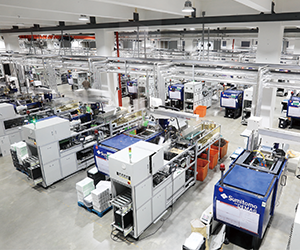
Last March, a 24-machine injection molding plant in Vietnam discovered this the hard way. Their energy bills had crept up 15% year-over-year, defect rates hovered around 12%, and overtime costs were eating margins. The injection molding machines themselves were fine — two-year-old Japanese presses running tight tolerances. The problem was everything around them: undersized hopper dryers, a chiller running at 60% efficiency, and manual material loading that created inconsistency on every shift. After a systematic auxiliary equipment upgrade, the plant cut energy consumption by 28%, reduced defects by 68%, and increased output by 18% — all with an 11-month payback.
If you have ever wondered why some plants consistently hit 97% yield while others stall at 85%, the answer is rarely the molding machine. It is the plastic auxiliary equipment — the dryers, chillers, conveyors, blenders, and robots that determine whether your resin arrives dry, your mold stays at the right temperature, and your parts eject cleanly every cycle.
This guide breaks down everything you need to know: the nine core equipment categories, how to match each one to your resin and capacity, real ROI data from the field, how Chinese and European brands compare, where Industry 4.0 is heading in 2026, and a maintenance playbook you can put to work today. Whether you are equipping a new facility or auditing an existing line, this is your roadmap.
Key Takeaways
- The global plastic auxiliary equipment market reaches $7.72 billion in 2025 and is projected to hit $10.33 billion by 2032, growing at a 4.25% CAGR — driven by automation and energy-efficiency mandates.
- Material handling equipment holds the largest market share at 24.1%, while injection molding applications represent 39.8% of all auxiliary equipment demand.
- Dehumidifying dryers are the single largest product segment at 35.6%, because moisture control directly determines part quality for hygroscopic resins.
- Real-world upgrades show 11-month payback periods, with energy savings of 28–44% and defect reductions of 68–86% when auxiliary systems are properly matched.
- EU ESPR regulations starting in 2026 require energy efficiency labeling for industrial drying equipment, making energy performance a purchasing requirement, not a nice-to-have.
What Is Plastic Auxiliary Equipment?
Auxiliary equipment refers to every machine and system that supports the primary molding or extrusion process — everything that happens before resin enters the barrel and after the part ejects from the mold. Without these machines, your injection molding press is just an expensive doorstop. With the right ones, it becomes a precision profit engine.
The global market for plastic auxiliary machinery stood at $7.72 billion in 2025 and is on track to reach $10.33 billion by 2032, according to market research from PmarketResearch. That growth reflects a fundamental shift: manufacturers are no longer treating auxiliaries as disposable peripherals. They are strategic assets that determine yield, energy cost, and product consistency.
Primary vs. Auxiliary Equipment — Where the Line Is Drawn
Primary equipment — injection molding machines, extruders, blow molders — transforms raw plastic into finished parts. Auxiliary equipment, sometimes called plastic peripheral equipment, handles everything else: drying resin to the correct moisture level, conveying material to the hopper, controlling mold temperature, cooling the process, blending additives, reclaiming scrap, and automating part removal.
The distinction matters because the primary machine sets the theoretical ceiling for quality, but the auxiliary systems determine how close you actually get to it. A $500,000 injection molding machine paired with a $2,000 undersized chiller will produce parts at 80% of its potential. Spend another $8,000 on the right chiller, and you unlock the remaining 20%.
The 6 Functions Every Auxiliary System Performs
Regardless of how many individual machines your plant uses, your auxiliary systems collectively perform six core functions:
- Material preparation — drying, dehumidifying, and preheating resin to the correct processing state
- Material transport — conveying resin from storage to machine hoppers automatically and without contamination
- Temperature management — heating and cooling the mold, hydraulic oil, and process water to precise setpoints
- Dosing and blending — mixing virgin resin, masterbatch, additives, and regrind at accurate ratios
- Scrap recovery — granulating runners, sprues, and rejected parts into reusable regrind
- Automation — removing parts from the mold, stacking, and transferring them to downstream operations
When all six functions work in harmony, your plant runs at peak efficiency. When any one fails, the whole line suffers. The nine equipment categories below cover these functions in detail.
The 9 Core Types of Plastic Auxiliary Equipment
Not every plant needs all nine categories. But every plant needs to understand what each one does, because the gap between “adequate” and “optimized” is where profits hide. Here are the nine core types of auxiliary equipment that define a modern injection molding facility.
1. Central Feeding Systems
A central feeding system automates the storage, drying, conveying, and dosing of plastic raw materials across an entire plant. Instead of workers manually loading resin into each machine’s hopper, a network of vacuum pipes delivers the right material, in the right quantity, at the right time, to every press on the floor.
For plants with 10 or more machines, central feeding typically cuts material handling labor by 60–80%, reduces contamination risk, and frees up 30–40% of floor space. It also ensures every machine receives identically treated material — the same drying time, the same dew point, the same blend ratio — which translates directly into tighter quality control.
For a deeper dive into how these systems work, component selection, and ROI calculations, read our Central Feeding System: Complete Guide. Explore SLECO feeding and conveying systems →
2. Hopper Dryers
Hopper dryers use hot air to remove surface moisture from non-hygroscopic resins like PP, PE, and PS. They are the workhorse of any injection molding shop — simple, reliable, and essential for preventing splay marks and bubbles in finished parts.
The key selection factors are hopper capacity (matched to your hourly throughput), heating power, and airflow design. A hopper dryer that is too small forces frequent refills and inconsistent drying. One that is too large wastes energy heating empty space. For most commodity resins, a drying temperature of 80–120°C with a residence time of 1–2 hours is sufficient.
Our detailed Hopper Dryer Selection Guide walks through sizing calculations, temperature settings by material, and energy-saving features. View SLECO drying and dehumidifying equipment →
3. Dehumidifying Dryers
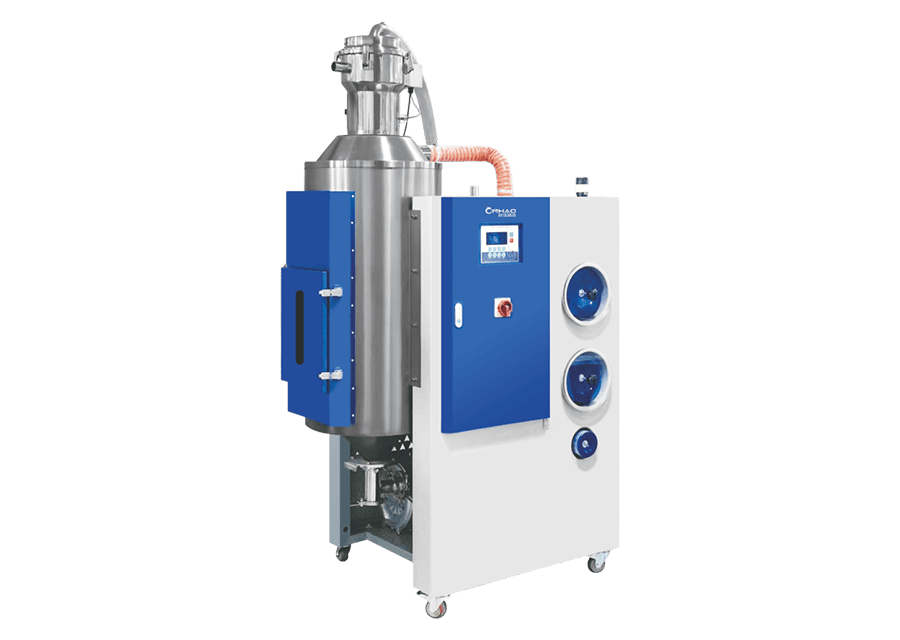
For hygroscopic resins — PET, nylon (PA), polycarbonate (PC), ABS, PMMA — hot air is not enough. These materials absorb moisture deep within the polymer structure, and only a dehumidifying dryer can extract it. These machines use a honeycomb rotor desiccant system to produce air with a dew point of -40°C or lower, pulling moisture out of the resin at the molecular level.
This is why dehumidifying dryers represent the largest product segment in the plastic auxiliary equipment market, accounting for 35.6% of total demand. Under-dried PET produces brittle, hazy parts. Under-dried nylon causes hydrolysis that degrades molecular weight and mechanical strength. The cost of a quality dehumidifying dryer is recovered quickly in reduced scrap alone.
Explore SLECO dehumidifying dryers →
4. Mold Temperature Controllers
Mold temperature controllers (MTCs) circulate water or oil through mold channels to maintain a precise, stable mold temperature. This single variable affects part quality, cycle time, and energy consumption more than most operators realize. Research shows that every additional degree of mold temperature above the optimal setpoint increases per-zone energy consumption by 0.5–1%.
Water-type MTCs handle 90% of applications (up to 180°C), while oil-type units serve high-temperature engineering plastics like PEEK and LCP (up to 350°C). Key features to look for include PID control with ±1°C stability, multi-zone capability for complex molds, and variable frequency drive (VFD) pumps that cut energy use by 20–40%.
Our Mold Temperature Controller Selection Guide covers capacity calculation, water vs. oil selection, and material temperature requirements in detail. View SLECO mold temperature controllers →
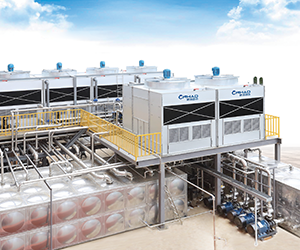
5. Chillers
Chillers remove heat from the mold cooling water, hydraulic oil, and feed throats to maintain process stability. They are the unsung heroes of cycle time reduction — a chiller that delivers 10°C water instead of 15°C can cut cooling time by 15–20%, which directly increases parts per hour.
The biggest decision in chiller selection is air-cooled vs. water-cooled, followed by compressor type. Variable frequency drive (VFD) chillers deserve special attention: they adjust compressor speed to match actual cooling load rather than cycling on and off, saving approximately 25% in energy compared to fixed-speed units. For plants running multiple machines, a central chiller system with a properly sized buffer tank often delivers better ROI than individual units.
Explore SLECO cooling systems →
6. Weighing and Mixing Machines / Gravimetric Blenders
Gravimetric blenders dose materials by weight rather than volume, achieving accuracy within ±0.1%. This precision matters more than most plant managers realize. A volumetric blender that is off by 3% on masterbatch means 3% too much or too little color on every single part. Over a production run of 100,000 parts, that translates to either wasted colorant or off-spec products.
Modern gravimetric blenders handle up to 8 components simultaneously — virgin resin, regrind, masterbatch, additives, and barrier materials — with recipe storage for instant material changeovers. They also log every batch for quality traceability, which is increasingly required by automotive and medical customers.
View SLECO dosing and mixing equipment →
7. Plastic Crushers and Granulators
Crushers and granulators reclaim runners, sprues, and rejected parts by reducing them to uniform regrind that can be fed back into the process. This is not just about saving money on material — it is about closing the loop in a circular economy where recycled content is increasingly mandated by regulation.
The EU now requires PET bottles to contain at least 30% recycled material by 2026. For processors, that means regrind handling is no longer optional — it is a compliance issue. Key selection factors include rotor type (scissor cut for clean regrind, herringbone for higher throughput), screen size (determines regrind particle size), and noise level (critical for worker safety compliance).
Explore SLECO granulating and crushing equipment →
8. Auto Loaders / Vacuum Conveying
Auto loaders use vacuum to transport plastic resin from storage containers to machine hoppers automatically. They eliminate manual bag-lifting, reduce material contamination, and ensure consistent hopper levels that prevent machine starve cycles. For plants not ready for a full central feeding system, individual auto loaders on each machine provide 70% of the benefit at 20% of the cost.
Modern auto loaders include features like material level sensors, filter cleaning systems, and recipe-based material selection. When integrated with a central controller, they can automatically switch between virgin resin and regrind based on production schedules.
View SLECO auto loaders and conveying systems →
9. Robotic Arms / Automation
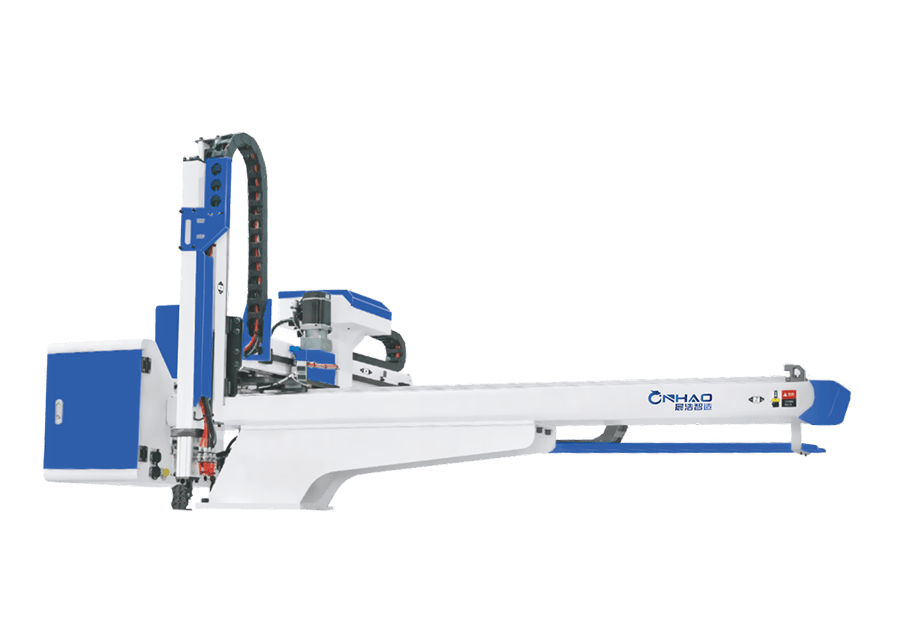
Robotic arms remove finished parts from the mold, stack them, and transfer them to conveyors or packaging — faster and more consistently than any human operator. A well-programmed robot reduces cycle time by 2–5 seconds per shot and eliminates the quality variability that comes with manual part removal.
Beyond simple pick-and-place, modern robotic systems perform in-mold labeling, insert loading, and quality inspection. They integrate with the molding machine via EUROMAP 67/77 interfaces, synchronizing their movements with mold open/close cycles to minimize cycle time impact.
Explore SLECO automation solutions →
How to Choose Plastic Auxiliary Equipment
Selecting the right plastic auxiliary machinery is not about buying the most expensive machine on the market. It is about matching each piece of equipment to your specific resin, production volume, quality requirements, and budget. The wrong choice costs you twice — once at purchase and again every day it runs inefficiently.
Material-Driven Selection Matrix
Your resin dictates which auxiliary equipment you need. This matrix shows the minimum equipment requirements for common materials:
| Malzeme | Dryer Type | Drying Temp | MTC Type | Critical Auxiliary |
|---|---|---|---|---|
| PP / PE | Hopper Dryer | 80–100°C | Water (30–60°C) | Auto Loader |
| PS / HIPS | Hopper Dryer | 80°C | Water (40–70°C) | Auto Loader |
| ABS | Dehumidifying | 80–90°C | Water (60–80°C) | Gravimetric Blender |
| PA (Nylon) | Dehumidifying | 80°C (-40°C dew point) | Water (70–90°C) | Dehumidifying Dryer |
| PC | Dehumidifying | 120°C (-40°C dew point) | Water (80–120°C) | Dehumidifying Dryer |
| PET | Dehumidifying | 160–180°C (-40°C dew point) | Oil (120–140°C) | Crusher (rPET compliance) |
| PEEK | Dehumidifying | 150°C (-50°C dew point) | Oil (180–220°C) | Oil-Type MTC |
Notice the pattern: as resin hygroscopicity and processing temperature increase, the required auxiliary equipment becomes more specialized and more expensive. Processing PET without a -40°C dehumidifying dryer is not cutting corners — it is manufacturing defective parts.
Sizing and Capacity Matching
Every piece of auxiliary equipment must be sized to match your machine’s actual throughput, not its nameplate maximum. A dryer sized for 50 kg/hour on a machine that typically runs 30 kg/hour wastes energy and occupies unnecessary floor space. Conversely, a chiller undersized for your cooling load causes mold temperature drift that destroys part quality.
The rule of thumb: size dryers at 1.5–2x your hourly material consumption to ensure adequate residence time. Size chillers at 1.2–1.3x your calculated cooling load to provide a safety margin for continuous production. Always verify that pump flow rates match your mold channel design — turbulent flow (Reynolds number above 4,000) is essential for efficient heat transfer.
Total Cost of Ownership vs. Upfront Price
The cheapest auxiliary equipment at purchase is rarely the cheapest over its operational life. A dehumidifying dryer that costs $3,000 less than a competitor but consumes 15% more energy will cost you more within two years of continuous operation. Energy, maintenance, scrap, and downtime all factor into the true cost.
Always calculate total cost of ownership (TCO) over a 5–7 year horizon. Include energy consumption (check kW ratings against actual load profiles), expected maintenance costs, spare parts availability, and the cost of production losses during downtime. A machine that is 20% more expensive but 30% more reliable often has a lower TCO.
Not sure which equipment fits your resin and capacity? Request a free equipment audit from SLECO engineers →
The ROI of Plastic Auxiliary Equipment
The return on investment from upgrading your auxiliary systems is faster than most manufacturers expect — often under 12 months. The gains come from three sources: reduced energy consumption, lower defect rates, and increased throughput. Here is what the numbers look like in practice.
Where the Savings Come From
Energy is the largest operating cost for most injection molding plants, and auxiliary equipment accounts for a significant share of it. A few high-impact upgrades consistently deliver fast paybacks:
- VFD chillers save approximately 25% in cooling energy compared to fixed-speed units
- PID auto-tuning retrofits on mold temperature controllers reduce energy consumption by 8–12%, with payback in 3–6 months
- Mold temperature optimization — every degree above setpoint costs 0.5–1% more energy per zone
- Central drying systems reduce drying energy by 25–35% versus individual dryers at each machine
Case Study — From 85% to 97% Yield in Under 2 Years
In 2023, a mid-sized automotive parts molder in Brazil was running 18 injection molding machines producing interior trim components. First-pass yield sat at 85%, energy costs were climbing, and scrap rates consumed 8% of raw material. An audit revealed that their hopper dryers were undersized, their chillers were running at 55% efficiency, and part removal was entirely manual.
The plant invested in properly sized dehumidifying dryers, two VFD chillers, gravimetric blenders, and robotic arms paired with an inline granulator for scrap recovery. The results after 14 months: energy efficiency improved by 44%, regrind blend ratio reached 25% without quality loss, waste dropped by 86%, and first-pass yield climbed to 97%. Total payback: 11.2 months. The plant manager later noted that the robotic arms alone paid for themselves in 8 months through reduced cycle times and zero damaged parts during removal.
A similar pattern played out at the Vietnam plant mentioned earlier — 28% energy reduction, 68% fewer defects, 18% more output, and an 11-month payback. The equipment was different, but the principle was the same: match the right auxiliary equipment to the process, and the ROI follows naturally.
China vs. European Auxiliary Equipment Brands
The auxiliary equipment market divides broadly into European and Chinese/Taiwanese manufacturers, and the choice between them depends on your application, budget, and quality requirements. There is no universally “better” option — only the right fit for your situation.
European brands like Motan, Wittmann Battenfeld, Piovan, and Regloplas set the benchmark for precision and longevity. Their dehumidifying dryers typically achieve dew points of -50°C with temperature stability of ±1°C, and their equipment routinely lasts 10+ years in continuous production. The trade-off is price: European equipment typically costs 2–3 times more than comparable Chinese models.
Chinese and Taiwanese brands like Shini, Xiecheng, and Cnhao offer compelling value. Modern Chinese auxiliary equipment has closed much of the quality gap over the past decade, with dehumidifying dryers now achieving -40°C dew points and temperature stability of ±1–2°C. For most commodity and engineering plastic applications, this performance is more than adequate. Equipment life typically runs 5–8 years, and the significantly lower upfront cost means faster payback — particularly important for plants in emerging markets or those scaling quickly.
The practical approach many plants adopt: use European equipment for the most critical processes (precision drying of engineering plastics, high-precision mold temperature control) and Chinese equipment for less critical functions (general conveying, commodity resin drying, basic chilling). This hybrid strategy optimizes both quality and cost.
SLECO (Streamline Eco Tech) positions itself in this value segment, offering a full range of auxiliary equipment — dryers, chillers, mold temperature controllers, feeders, blenders, and granulators — with energy-efficient designs and Industry 4.0 connectivity at a price point accessible to manufacturers worldwide.
Industry 4.0 and Smart Auxiliary Equipment Trends
The conversation around plastic processing auxiliary equipment is shifting from “what does it do” to “what does it know.” Industry 4.0 connectivity is transforming auxiliary machines from isolated units into networked nodes that share data, predict failures, and optimize themselves.
Connectivity Standards: OPC UA and EUROMAP 77
EUROMAP 77, the OPC UA companion specification for injection molding, defines a standardized data exchange interface that works across all major machine brands. This means your dryer, chiller, blender, and molding machine can communicate on a single protocol — no custom drivers, no manufacturer-specific software. Auxiliary equipment that supports EUROMAP 77 or OPC UA can feed real-time data into plant-wide monitoring systems for OEE calculation, energy tracking, and quality traceability.
For plants implementing data collection, the impact is measurable: studies show 6–10% energy reduction when production data is linked to process parameters, and 10–20% efficiency gains when OEE visibility drives systematic optimization.
AI and Predictive Maintenance
Artificial intelligence is moving from buzzword to practical tool in auxiliary equipment management. AI-driven monitoring platforms can track drying dew point, hopper temperature, vacuum pressure, cooling-water performance, dosing accuracy, and motor vibration to identify early signs of equipment degradation. Plants using predictive maintenance report 28% fewer unplanned stoppages and 22% lower maintenance costs compared to calendar-based scheduling.
For auxiliary equipment specifically, AI shines in resin drying — machine learning models can reduce over-drying (which wastes energy and degrades some polymers), prevent moisture-related defects, and optimize energy use based on resin type, ambient humidity, and production schedules.
2026 Regulatory Drivers
Regulation is accelerating the shift toward smart, efficient auxiliary equipment. The EU Ecodesign for Sustainable Products Regulation (ESPR) begins requiring energy efficiency labeling for industrial drying equipment starting in 2026. This means European buyers will need to verify and compare dryer energy performance before purchase — making efficiency data a purchasing requirement rather than a marketing claim.
Simultaneously, the EU mandate for 30% recycled content in PET bottles by 2026 forces processors to invest in auxiliary systems capable of handling rPET consistently — particularly in drying and material preparation, where recycled resin’s variable moisture content demands more robust dehumidifying capacity.
Maintenance and Troubleshooting Quick Reference
Even the best auxiliary equipment needs regular maintenance to perform at its peak. The following tables provide a quick reference for maintenance scheduling and common troubleshooting scenarios.
Tiered Maintenance Schedule
| Frequency | Equipment | Maintenance Task |
|---|---|---|
| Daily | All | Visual inspection, check for leaks, verify alarm indicators, log operating parameters |
| Weekly | Dryers | Clean filters, check dew point readings, inspect hopper for material bridging |
| Weekly | Chillers | Check refrigerant pressure, clean condenser coils, verify water flow rates |
| Monthly | MTCs | Calibrate temperature sensors, inspect pump seals, clean heat exchanger |
| Monthly | Blenders | Verify dosing accuracy, clean load cells, inspect mixing valves |
| Quarterly | All | Lubricate bearings, inspect electrical connections, test safety interlocks |
| Annually | All | Full service: replace worn parts, recalibrate sensors, update firmware, energy audit |
Common Fault Quick Reference
| Symptom | Likely Cause | First Action |
|---|---|---|
| Splay marks on parts | Resin moisture too high | Check dryer dew point; verify drying temp and time |
| Mold temperature drift | Chiller undersized or fouled | Clean heat exchanger; verify cooling capacity vs. load |
| Color inconsistency | Blender dosing error | Recalibrate load cells; check material flow from hoppers |
| Auto loader stops cycling | Filter blocked or vacuum leak | Clean filter; check pipe connections for leaks |
| High energy consumption | Equipment running outside optimal range | Audit setpoints; check VFD operation; verify insulation |
| Inconsistent part weight | Inconsistent material feed | Check hopper for bridging; verify loader cycle settings |
| Noisy granulator operation | Worn blades or foreign object | Inspect rotor blades; check screen for blockage |
Building Your Auxiliary Equipment Strategy
Your auxiliary equipment is not a collection of isolated purchases — it is an integrated system that determines whether your plant runs at 85% yield or 97%. The plants that win are the ones that treat auxiliary equipment as strategic infrastructure, not disposable peripherals.
Here is what we have covered: the nine core equipment categories and what each one does, how to match equipment to your specific resin and capacity, the real ROI data that proves upgrades pay for themselves in under a year, how Chinese and European brands compare on precision versus value, where Industry 4.0 and 2026 regulations are pushing the market, and a maintenance framework to keep everything running at peak performance.
Your next step is simple. Audit your current auxiliary equipment against the material-driven selection matrix. Identify the weakest link — the undersized dryer, the inefficient chiller, the manual process that creates variability. Start there, because that is where the fastest ROI lives. Every plant that has followed this path — from Vietnam to Brazil — has seen payback in under 12 months.
Ready to stop leaving profit on the table? Get a customized auxiliary equipment proposal for your plant →
Frequently Asked Questions
What is plastic auxiliary equipment?
Plastic auxiliary equipment includes all machines and systems that support the primary molding or extrusion process — dryers, chillers, mold temperature controllers, conveyors, blenders, granulators, and robotic arms. These machines handle resin preparation, material transport, temperature control, dosing, scrap recovery, and automation. Together, they determine the quality, efficiency, and profitability of your plastic manufacturing operation.
How much does plastic auxiliary equipment cost?
Costs vary widely by type and capacity. A hopper dryer may cost $1,000–$5,000, while a dehumidifying dryer ranges from $5,000–$25,000. Mold temperature controllers typically run $3,000–$15,000, and chillers range from $5,000–$50,000 depending on cooling capacity. Central feeding systems for 10–25 machines can cost $60,000–$150,000. Chinese brands like CNHAO generally cost 40–60% less than European equivalents with similar specifications.
How do I choose the right auxiliary equipment for injection molding?
Start with your resin. Hygroscopic materials (PET, PA, PC, ABS) require dehumidifying dryers with -40°C dew points. Non-hygroscopic materials (PP, PE, PS) need only hopper dryers. Match mold temperature controllers to your required mold temperature range (water for below 180°C, oil for above). Size chillers at 1.2–1.3x your calculated cooling load. Always calculate total cost of ownership over 5–7 years, not just upfront price.
What is the ROI of upgrading plastic auxiliary equipment?
Typical payback periods range from 8–14 months. Real-world case studies show energy savings of 28–44%, defect reductions of 68–86%, and output increases of 18% when auxiliary equipment is properly matched to the process. The fastest-ROI upgrades include VFD chillers (25% energy savings), PID auto-tuning retrofits (8–12% energy reduction, 3–6 month payback), and robotic arms (cycle time reduction and zero damaged parts).
Related guides: Central Feeding System: Complete Guide | How to Choose a Hopper Dryer | Mold Temperature Controller Selection Guide | SLECO Mold Temperature Controllers | Contact SLECO
Related: Plastic Granulator Selection Guide