






Mold Temperature Controller: The One Piece of Auxiliary Gear Nobody Credits (Until It Breaks)

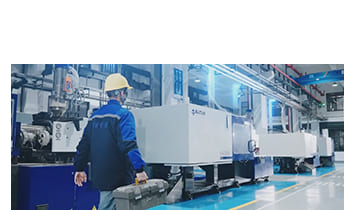
Walk onto any injection molding floor and ask where the part quality comes from. People will point at the machine, the resin, the mold. Almost nobody mentions the mold temperature controller sitting in the corner, quietly circulating hot water or oil through the mold’s channels.
Then one day the MTC’s pump fails. The mold temperature climbs. Parts start warping. The quality manager is looking at scrap rates he has not seen in years. Suddenly everybody knows exactly what that box does.
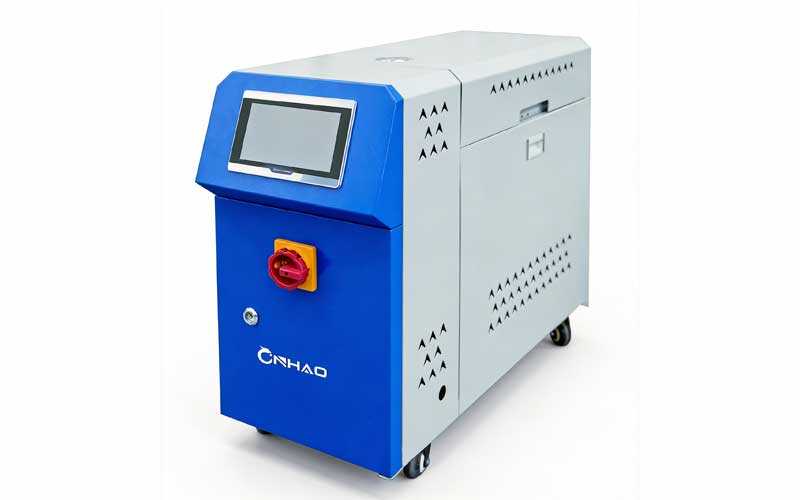
A mold temperature controller (MTC, sometimes called a temperature control unit or TCU) is not glamorous. But it is the difference between a stable process and a process that drifts every time the ambient temperature changes or a cooling line clogs.
What a Mold Temperature Controller Actually Does
A mold has channels bored through it 2014 standard on every injection molding job. The MTC pumps a heat-transfer fluid — water or oil — through those channels to hold the mold at a set temperature. When the mold runs cold (from the molten plastic hitting it), the MTC adds heat. Some units also cool, pulling heat out when the mold gets too hot.
The control loop is simple: a sensor in the mold or in the unit’s outlet reads temperature, the controller fires the heater or the cooling valve to hold setpoint. Good units hold ±0.1°C. On a stable process, that tight control is what keeps every shot the same as the last one.
What people miss is that the MTC is fighting the process constantly. Each shot of 220°C melt dumps heat into the mold. The MTC has to pull that heat back out (or add it, for high-temp molds) before the next shot. If the pump flow is too low, the fluid cannot move enough heat, and the mold temperature creeps up over a run.
Water Type or Oil Type — The First Decision
This is the question every buyer asks, and the answer depends almost entirely on one number: the temperature you need to hold.
Water-Type MTC
Water-type units run clean water (usually with corrosion inhibitor) through the mold. Standard units reach about 90-95°C. Pressurized high-temperature water units push to 160°C by raising the system pressure above the water’s boiling point.
Use water type when:** Your process temperature is under 95°C (or under 160°C if you can justify the cost of a pressurized unit). That covers the vast majority of thermoplastics — ABS, PP, PE, PS, most nylons, PC at moderate temps.
Why water is usually better:
– Water has roughly four times the heat-carrying capacity of oil per unit volume. Same pump moves more heat.
– No mess. A water leak wipes up. An oil leak means a cleanup and a fire-safety conversation.
– Faster response. Water heats and cools quicker, so the unit recovers from disturbances faster.
– Cheaper to run and maintain.
Oil-Type MTC
Oil-type units circulate heat-transfer oil and reach 200-350°C depending on the fluid.
Use oil type when:** You run engineering resins that need high mold temperatures — PPS above 160°C, PEEK, LCP, some grades of PBT and PET where the spec calls for it. Water physically cannot get there at atmospheric pressure.
The trade-offs nobody enjoys:
– Oil is slower to respond. The unit takes longer to reach setpoint and longer to recover.
– Oil leaks are a housekeeping and fire hazard. You need the right fluid for the temperature, and you need to keep the system sealed.
– Oil degrades. It darkens, gets viscous, and loses heat-transfer efficiency over time. You change it on a schedule, not when you feel like it.
If you are running standard commodity resins, an oil-type unit is overkill — you are paying for temperature range you will never use, and taking on the maintenance of a fluid you do not need.
The Sweating Mold Problem
Ask any molder running cold molds in a humid plant about “mold sweating” and watch them wince.
When the mold surface temperature drops below the dew point of the surrounding air, water condenses on the mold faces — exactly like a cold drink on a summer day. The mold literally sweats.
What it does to you:
– Water drips onto the parting line. You get water marks, splay, and short shots as steam forms in the cavity.
– The mold rusts. A sweating mold in a humid shop develops rust on the faces in days, not months.
– The rust transfers to parts. Surface defects you cannot explain until someone looks at the mold under a light.
The fix is not complicated, but people fight it:
– Raise the mold temperature above the dew point. If your shop dew point is 18°C, run the mold at 20°C or higher. The parts may need a slightly longer cycle to compensate, but you stop the condensation.
– Drop the ambient humidity. Dehumidification in the molding area solves sweating at the source.
– Use mold tempering instead of direct cooling. A unit that holds the mold at a set temperature (rather than blasting it with cold water) keeps the surface above dew point automatically.
The mistake I see most: a shop running molds at 10°C in a humid plant because “colder is faster,” then spending the savings on rust repair and scrap from short shots. The mold temperature controller setpoint is the lever — use it.
How Mold Temperature Changes the Part
This is where the MTC earns its keep in injection molding. Mold temperature is not just about keeping things from overheating. It directly drives four things:
Fill and flow. Higher mold temperature keeps the melt fluid longer in the cavity. For thin walls, long flow paths, and weld-line-prone geometries, a hotter mold means fewer short shots and stronger weld lines. Run it too cold and the melt freezes before the cavity fills.
Cycle time. There is a tension here. A colder mold solidifies the part faster, so you can eject sooner — shorter cycle. But a mold that is too cold causes its own defects (flow marks, sink, warpage from internal stress). The right temperature is the lowest one that still gives you good parts, not the lowest one the machine will allow.
Warpage and stress. Crystalline resins (nylon, PBT, PP, POM) need higher mold temperatures to crystallize uniformly. Crystallization releases heat — if the mold is too cold, the part crystallizes unevenly, locks in stress, and warps when it leaves the mold. Amorphous resins (PC, ABS, PS) are less sensitive but still show stress and sink marks from cold molds.
Surface finish. Hotter mold, glossier surface — up to a point. Cold molds give matte or flow-marked surfaces. If your part needs a cosmetic finish, mold temperature is doing more of the work than the resin grade.
A stable mold temperature — held by a functioning MTC — is what makes all four of these predictable shot after shot. Without it, the same machine makes different parts depending on what the cooling water temperature did overnight.
Sizing an MTC: The Numbers That Matter
Buying an MTC by “it has enough horsepower” gets people in trouble. Three specs actually matter:
Pump flow rate. The pump has to push enough fluid through the mold’s channels to overcome their pressure drop and still deliver the flow the process needs. Undersized pump = low flow = poor heat removal = rising mold temp. Ask for the mold’s pressure drop at your required flow, and size the pump to deliver that flow against that drop. A unit that moves lots of water through a short hose but chokes on your mold’s restrictive channels is useless.
Heating capacity (kW). The heater must replace the heat the process pulls out of the mold between cycles, plus warm the mold from cold start. A rough starting point: heating capacity in kW should cover the hourly heat load of the process plus startup. Undersized heater means the unit cannot hold setpoint during continuous running, even if it hits it at startup.
Cooling capacity. If the unit also cools, its cooling valve and heat exchanger must pull heat out as fast as the process dumps it in. For high-cavity or hot-runner molds, the cooling load is significant. Check the cooling capacity against your actual process heat, not the catalog’s optimistic number.
Problems You Will Actually See
No flow / low flow. Pump cavitation, air lock on startup, clogged strainer, or a closed valve somewhere in the loop. Symptoms: mold temp climbs, unit alarms on low flow. Fix: bleed air at startup, clean the strainer (on a schedule), verify all valves open. Most “MTC broken” calls are a clogged strainer.
Mold overheating, heater won’t shut off. A stuck contactor or failed solid-state relay leaves the heater energized even when the controller says off. The mold runs hot, parts warp, and if nobody catches it the unit can trip on high-limit. Fix: test the heater circuit independently. A relay that welds closed is a fire risk — replace it, do not bypass it.
Uneven temperature between cavities. If you run a multi-cavity mold and one cavity makes bad parts while its neighbor is fine, the MTC flow is likely unbalanced — one circuit gets most of the fluid, the other starves. Fix: balance the mold’s flow circuits (restrictor valves or separate zones), or run separate temperature zones per cavity group.
Leaks. Water units leak at fittings and hoses. Oil units leak at seals. Either way, a slow leak drops system pressure and flow. Fix: tighten fittings, replace cracked hoses, and do not ignore a drip — it becomes a puddle and then a failure.
Bottom Line
A mold temperature controller is not the expensive part of your auxiliary setup, and it is rarely the one people show off. But it is the one holding your process steady. Pick water type unless you genuinely need the temperature oil provides. Set the mold temperature for the part, not for the clock — fighting mold sweating by running colder just trades one problem for a worse one. Size the pump and heater for your real mold, not the catalog number. And clean the strainer before it clogs, not after the mold overheats.
If you are specifying mold temperature controllers for your plant — or trying to figure out why your process drifts on humid days — we can walk through your resin, your mold, and your shop conditions and size the right units. Бізбен байланысыңыз
—
More from our auxiliary equipment series: how to choose a dehumidifying dryer, central conveying systems explained