






How to Choose the Right Plastic Dehumidifying Dryer: A Complete Buying Guide (2026)

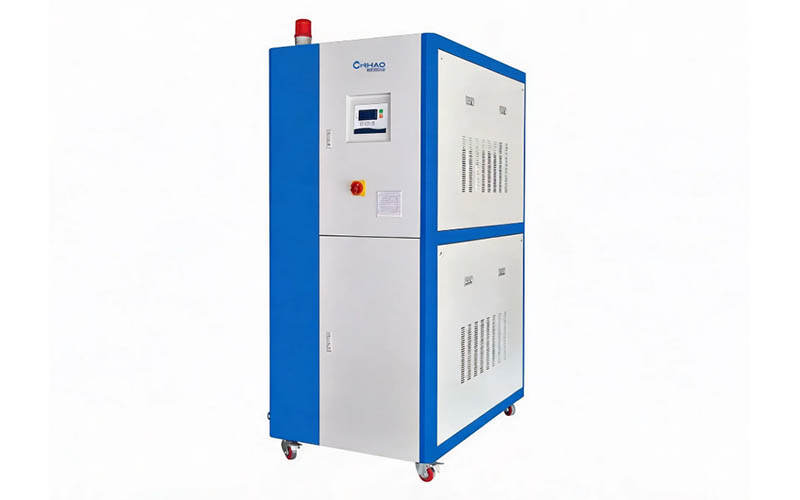
Moisture is the silent enemy of plastic processing. Even a fraction of a percent of residual water in resin can cause silver streaks, brittleness, poor weld lines, and rejected parts. For hygroscopic polymers such as PET, PA (nylon), PC, ABS, and PBT, ambient-air hot-air dryers are simply not enough — you need a plastic dehumidifying dryer that brings the dew point well below -40 °C.
This guide walks plant managers, process engineers, and procurement teams through everything you need to specify the right desiccant dryer: how it works, which specifications matter, how to match it to your resin, and the mistakes that quietly drain energy and quality.
Why Moisture Control Matters in Plastic Processing
Hygroscopic resins absorb moisture from the air and lock it into their molecular structure. When that water turns to steam inside the barrel, it creates voids and hydrolytic degradation of the polymer chain. The result is measurable: lower tensile strength, surface defects, and inconsistent dimensions.
A properly dried material flows predictably, fills the mold completely, and produces parts that pass first time. In high-volume injection molding or extrusion, that reliability is worth far more than the dryer’s sticker price.
How Dehumidifying Dryers Work
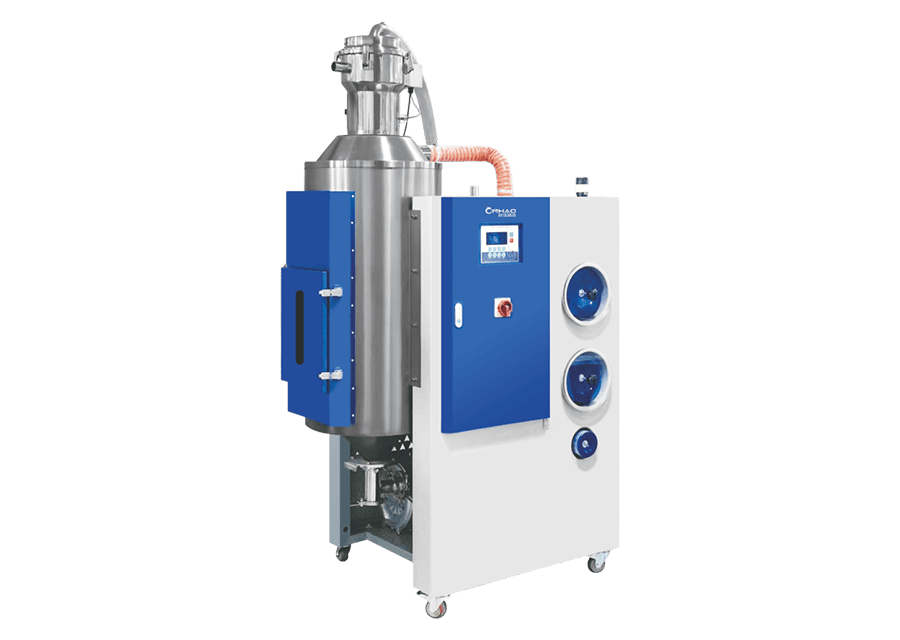
A dehumidifying dryer (also called a desiccant dryer) forces a closed loop of very dry air through a bed of hot resin, carrying moisture away. Two technologies dominate the market:
Desiccant Bead (Dual-Tower) Dryers
Traditional systems use two towers of activated alumina or molecular sieve beads. While one tower dries the process air, the other is regenerated with hot air. They are robust and field-proven, but the valve switching can cause small dew-point fluctuations.
Honeycomb Rotor Dryers
A continuously rotating molecular-sieve wheel provides a steady, uninterrupted stream of dry air with a stable dew point. Rotor dryers are compact, deliver tighter dew-point control (often -50 °C or lower), and are increasingly the default for technical and engineered resins.
Key Specifications to Evaluate
Dew Point
The single most important number. For most hygroscopic resins, target a process air dew point of -40 °C to -50 °C. PET and some nylons benefit from -50 °C or below. Always ask for the guaranteed dew point, not just the rated one.
Drying Temperature & Time
Each resin has an optimum drying temperature and residence time. Drying too hot degrades the material; too cool or too short leaves moisture behind. Typical ranges: PET 160–180 °C, PA6 80–90 °C, PC 120–130 °C, ABS 80–90 °C.
Throughput Capacity
Size the dryer to peak resin consumption, not average. Calculate the kg/hour your molding cells actually consume and add a safety margin of 15–20%. Undersized dryers are the #1 cause of intermittent quality complaints.
Energy Efficiency
Look for closed-loop air design, motorized or variable-speed blowers, and heat recovery from the regeneration circuit. Modern dehumidifying dryers can cut drying energy by 30–50% versus legacy open-loop units.
Matching the Dryer to Resin Type
| Resin | Dry Temp (°C) | Dew Point | Typical Time |
|---|---|---|---|
| PET | 160–180 | ≤ -50 °C | 4–6 h |
| PA6 / PA66 | 80–90 | ≤ -40 °C | 3–5 h |
| PC | 120–130 | ≤ -40 °C | 3–4 h |
| ABS | 80–90 | ≤ -40 °C | 2–3 h |
| PBT | 120–130 | ≤ -40 °C | 3–4 h |
Note: Values are starting points. Always confirm with the resin supplier’s data sheet and validate with a moisture analyzer.
Errores comunes que hay que evitar
- Using hot-air dryers for hygroscopic resins. They cannot reach the required dew point.
- Oversizing by guesswork. A wildly oversized dryer wastes energy and can over-dry sensitive materials.
- Ignoring the conveying link. Dry resin re-absorbs moisture if it travels through ambient air. Pair the dryer with a closed conveying system to protect the dry material right up to the throat.
- No dew-point monitoring. If you can’t measure it, you can’t prove the process is in control.
Our Recommended Configuration
For most technical-resin processors, we recommend a honeycomb rotor dehumidifying dryer with closed-loop air, integrated dew-point sensing, and a central material conveying interface. This combination stabilizes quality, reduces energy per kilogram, and feeds directly into a central auxiliary system for the whole plant.
See these systems in person at our upcoming trade shows — visit the exhibitions page for booth details and dates.
Conclusión
Choosing a plastic dehumidifying dryer is really about controlling one variable: the moisture in your resin. Specify by dew point first, size by peak throughput, and protect the dry material all the way to the machine. Get those three right and scrap rates drop while output climbs.
Streamline Eco Tech designs and manufactures dehumidifying dryers, central conveying, dosing, and temperature-control systems for plastics processors worldwide. Talk to our application engineers about a configuration tuned to your resin slate.