





Industrial Water Chiller: Air-Cooled vs Water-Cooled and How to Choose

Industrial Water Chiller: Air-Cooled vs Water-Cooled and How to Choose
A chiller is the machine nobody thinks about until parts start warping and cycle times creep up. The catch: picking the wrong one — or the wrong type — can cost you more in energy every month than the machine itself. Here’s how to choose an industrial chiller that actually pays for itself.
I’ve walked into more injection molding plants than I can count, and the chiller is the one piece of auxiliary equipment everyone ignores until it’s too late. It sits in a corner or on a roof, pumping chilled water that nobody looks at, running shift after shift. Then one hot summer day the parts start warping, the cycle times stretch, and suddenly everyone’s asking why the cooling system can’t keep up.
Here’s the uncomfortable truth. An industrial chiller doesn’t have to break to cost you money. It just has to be the wrong size, the wrong type, or running inefficiently — and it’ll quietly burn energy and scrap parts for years. Most of the chiller problems I’ve seen aren’t mechanical failures. They’re decisions made at purchase time, and they’re almost always fixable by choosing smarter up front.
Here’s the thing: Cooling is not a place to save money by under-sizing. A chiller that’s too small runs flat-out forever, uses more energy than a properly sized one, and still can’t hold temperature on hot days. A chiller that’s slightly oversized with a good controller runs efficiently and stays cool when you need it most.
What an industrial water chiller actually does
Strip away the plumbing and a process chiller has one job: remove heat from your process water and hold it at a set temperature, so the molds and barrels get consistent cooling shot after shot. In injection molding, that chilled water is what sets the cooling phase of every cycle — the phase that often takes up the most time.
It works on a simple principle. A compressor compresses refrigerant, the refrigerant releases heat through a condenser, and the evaporator chills the water that circulates through your machine. The two big decisions — how the condenser rejects heat und how big the system is — are exactly where buyers go wrong.
Air-cooled vs. water-cooled chiller: which one do you need?
This is the fork in the road most buyers hit, and it’s worth getting right the first time because they’re built differently and suit different plants.
An air-cooled chiller rejects heat through finned coils and fans, blowing it into the surrounding air. It’s self-contained — no cooling tower needed — and it’s easier to install and maintain. The trade-off: on hot days it has to work harder because it’s dumping heat into already-warm air, which costs energy. It’s usually the right pick for smaller plants, portable cooling, or places where water is scarce.
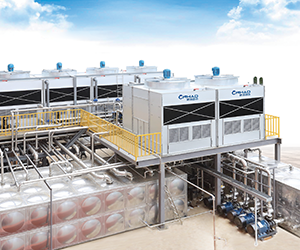
A water-cooled chiller uses a cooling tower or a water source to reject heat. It runs more efficiently — especially in hot climates, where the cooling water is cooler than the ambient air — and it can be more energy-efficient over a year. The catch: it needs a cooling tower, more piping, and more maintenance. It tends to suit larger plants or central chilling systems that run continuously.
Air-cooled chiller
Rejects heat through finned coils and fans. Self-contained, no cooling tower, easier to install and maintain. Runs harder on hot days and uses more energy in warm climates. Best for smaller plants, portable cooling, or where water is limited.
Water-cooled chiller
Uses a cooling tower or water source to reject heat. More energy-efficient in hot climates, since cooling water runs cooler than ambient air. Needs a cooling tower and more maintenance. Suits larger plants and central chilling systems.
There’s no universal “right” answer — it depends on your climate, your plant size, and how much you’re willing to maintain. A good supplier will ask about your location and your floor load before recommending one. If they try to sell you one type without asking, be careful.
How to size a chiller for your plant
Sizing a chiller comes down to one calculation: how much heat do you need to remove, and what’s the temperature you have to hold?
- Start with the cooling load. For injection molding, a common rule of thumb is roughly 1 ton of cooling per 10 to 15 horsepower of injection unit. But the exact number depends on your cycle, your material, and your mold. Don’t guess — calculate the heat load or ask your supplier to size it from your actual process data.
- Know the required temperature. A chiller rated for a certain tonnage at one temperature delivers less at another. If you need very low chilled-water temperature, the capacity drops. Be clear about your target temperature.
- Add margin. A slightly oversized chiller with a good controller is safer and often more efficient than one running at 100% load all day. A 20% to 25% margin is a reasonable place to start.
- Think about peak load, not average. Hot summer afternoons are when you need full capacity. Size for the worst case, not the average day.
The mistake I see most: People buy a chiller sized to their machine’s nameplate power and assume that’s the cooling load. But a press’s heat rejection isn’t the same as its motor power — and if you size on the wrong number, you end up under-cooled on peak days. Get the heat load right, not the horsepower.
How an efficient chiller saves you money
Energy is where a chiller earns or loses its keep. A poorly chosen or poorly run chiller can be one of the biggest energy consumers in the plant — but a few choices make a real difference.
- Variable-frequency drive (VFD). A chiller with a variable-frequency compressor adjusts its output to match the load, instead of running full speed and cycling on and off. On partial loads this saves a lot of energy.
- Match the type to your climate. In hot regions, a water-cooled chiller with a cooling tower often uses meaningfully less electricity than an air-cooled unit struggling to reject heat into hot air.
- Don’t overset the temperature. Every degree colder the water runs, the harder the chiller works. Set the chilled-water temperature to what the process actually needs — running it colder than necessary wastes energy.
- Use a central system for larger plants. For a dozen or more machines, a central chilling system with one or two bigger, efficient chillers can beat a fleet of small portables — fewer compressors, better load management, easier maintenance.
The chiller problems that look like something else
I want to spend a second on the failures that get blamed on the wrong machine.
The classic: parts start warping or sticking and the operator swears it’s the mold or the injection unit. You check the mold cooling lines, the back pressure, the screw. Then someone notices the chiller’s been running near its limit since the weather turned hot, and the chilled-water temperature has crept up a few degrees. That warmer water means longer cooling phases, slower cycles, and parts that don’t cool evenly.
Another one: a chiller that’s too big for the load short-cycles — turning on and off frequently. That constant cycling wears out the compressor faster and wastes energy. An oversized chiller isn’t automatically better; it needs a controller that handles the light load gracefully.
And the maintenance one: a dirty condenser coil on an air-cooled unit, or a neglected cooling tower on a water-cooled one. Both quietly make the chiller work harder, burn more energy, and deliver warmer water than it should. Cleaning is cheap; the energy you waste running a fouled chiller isn’t.
Maintenance that keeps a chiller efficient
Here’s the maintenance advice I actually give, and it’s boring on purpose:
- Clean the condenser. On an air-cooled unit, blow out the coils; on a water-cooled unit, keep the cooling tower clean. Fouled condensers are the #1 cause of energy waste and warmer-than-setpoint water.
- Watch the chilled-water temperature. If it creeps up when you haven’t changed anything, something is degrading. Catch it early.
- Check refrigerant charge. A low charge makes a chiller work harder and run inefficiently. A leak is a mechanical issue you can’t ignore.
- Monitor the water quality. Scale in the evaporator or piping insulates and reduces heat transfer. Treat the water and keep the system clean.
- Keep spare filters and fan belts. For air-cooled units, a clean filter and good belts keep airflow up, which keeps efficiency up.
Chiller questions, answered straight
What does an industrial water chiller do?
It removes heat from your process water and holds it at a set temperature, so molds and barrels get consistent cooling. In injection molding, that chilled water controls the cooling phase of every cycle — often the longest phase.
Air-cooled or water-cooled chiller — which is better?
Air-cooled is self-contained, easier to install and maintain, and suits smaller plants or warm, water-scarce locations. Water-cooled is more energy-efficient in hot climates and suits larger plants and central chilling systems, but needs a cooling tower and more maintenance.
How do I size a chiller for injection molding?
Calculate the actual heat load and the required temperature, add 20–25% margin, and size for peak load rather than average. A common rule of thumb is about 1 ton of cooling per 10–15 HP of injection unit, but confirm with your process data.
Why is my chiller using so much energy?
Usually a fouled condenser, a dirty cooling tower, a low refrigerant charge, or a chiller running colder than the process needs. Also check that the type and size match your actual load and climate.
Should I use one central chiller or several portable ones?
For a dozen or more machines, a central chilling system with one or two efficient chillers usually beats a fleet of small portables — fewer compressors, better load management, and easier maintenance.
So what should you actually buy?
Buy an industrial water chiller that’s sized to your actual heat load — not your nameplate horsepower — with a 20–25% margin and enough capacity for peak days. Match the type to your climate: air-cooled for smaller plants or water-scarce locations, water-cooled with a cooling tower for larger plants and hot regions. And look for a variable-frequency drive so the chiller runs efficiently at partial load instead of cycling on and off.
Everything else is marketing. A chiller that’s sized right, matched to your climate, and maintained cleanly will hold temperature, save energy, and keep your parts cool shift after shift. One that’s undersized, wrong-type, or fouled will quietly burn money and scrap parts while it looks perfectly fine from the outside.
One more honest note: If you’re sizing a chiller, don’t guess the heat load — get your supplier to calculate it from your actual cycle and process data, and make them put the temperature, capacity, and energy efficiency in writing. Cooling is the phase that runs longest in every cycle, so getting the chiller right pays off on every single shot, all year round.