





中央式与机侧除湿干燥机:如何选择合适的干燥系统

中央式与机侧除湿干燥机:如何选择合适的干燥系统
You can dry every press with its own small dehumidifying dryer, or you can run one central unit and pipe dry air to all your machines. Both work. One of them quietly bleeds money and floor space for years. Here is how to tell which is yours.
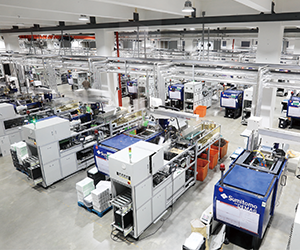
I walked into a molding plant in Ningbo a couple years back, twenty presses, and every one of them had its own little desiccant dryer squatting next to it. The air in that room was like a sauna. Fifteen boxes of molecular sieve, fifteen heaters, fifteen blowers, all dumping heat into the same space the operators were trying to work in. The plant manager told me the electric bill in July was their biggest single line item. I wasn’t surprised.
Nobody sets out to build a plant that way. You start with two presses, you buy a machine-side dryer because that’s what fits. You add a press, you add a dryer. Five years later you’ve got a wall of small drying units, and nobody remembers there was ever another option. This guide is about the option most plants skip: a 中央除湿干燥系统.
Here is the thing: There’s no single “right” answer that applies to every shop. The honest answer depends on how many machines you run, how much of the time they’re actually producing, and how much you value floor space and energy. What I want to do is lay out the real trade-offs so you can make the call with your eyes open — not just buy whatever the last salesman recommended.
Two ways to dry plastic before molding
Before we get into the comparison, let’s be clear about what each setup actually is. A lot of the confusion I hear on the shop floor comes from people using the terms loosely.
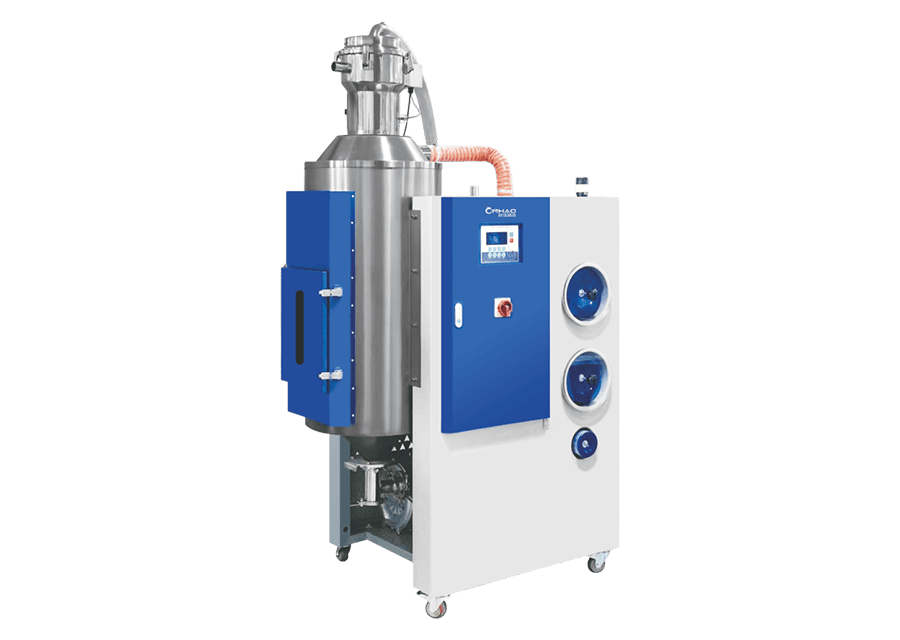
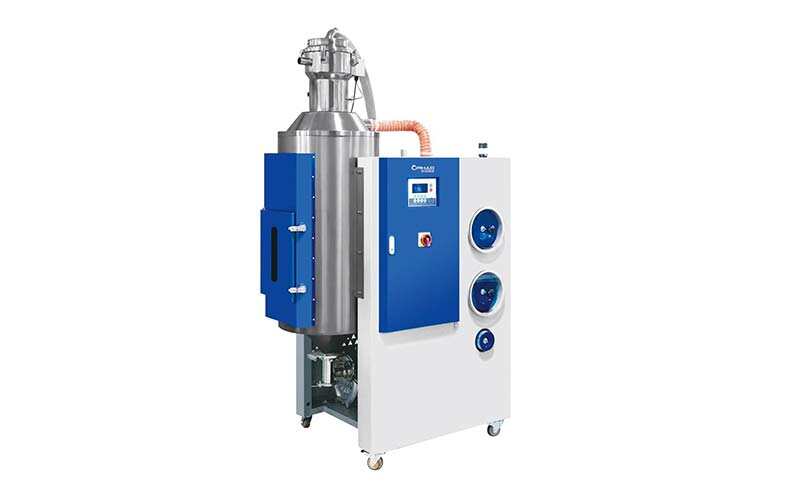
Machine-side (or hopper-mounted) dehumidifying dryers are the units you see bolted to the throat of an injection molding machine. Each one is a complete, self-contained system: a hopper to hold the material, a desiccant cartridge to dry the air, a heater, a blower, and its own regeneration circuit. You plug it in, set the dew point, and it dries whatever’s in the hopper. For a single machine running one resin, this is dead simple.
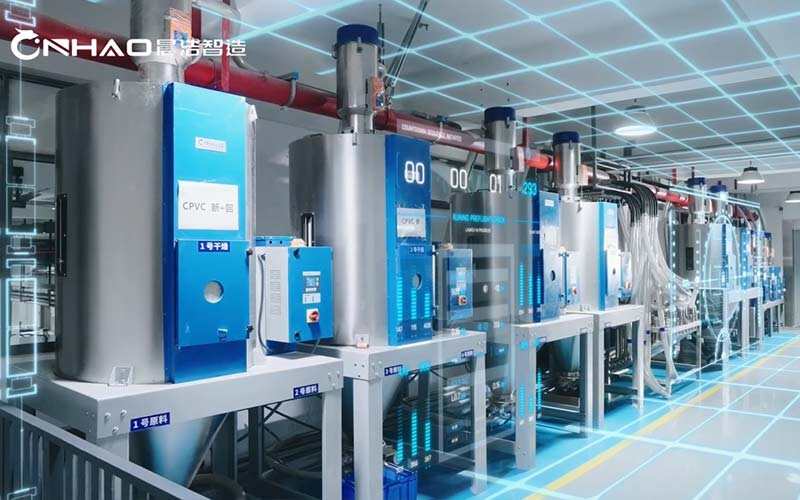
A central dehumidifying drying system is a different animal. You run one (or a few) larger drying units in a central location — often out of the production area, or on a mezzanine — and each one supplies dry air to several machines through insulated piping. The material itself usually still sits in a hopper at each press, but the hopper is fed by the central unit’s dry-air stream instead of having its own dryer bolted on. In many installations the central system also includes a central vacuum conveying setup to move material to the hoppers, which is where it overlaps with a smart central feeding system.
It’s worth saying the obvious: both approaches use the same drying principle. If you’ve read our guide on how to choose a plastic dehumidifying dryer, you already know about dew point, drying temperature, and why hygroscopic resins like PET and nylon have to be dried properly. The difference here isn’t the science — it’s the architecture. One dryer per press, or one system for the whole plant.
Energy: where central drying wins big
This is the part that gets people’s attention, because it shows up in real money every month.
Picture the machine-side setup again. Fifteen dryers, each with a heater that cycles on and off, each with a blower running basically all the time, each regenerating its desiccant on a timer whether it needs to or not. They’re not terribly efficient individually, but the real waste is that they run flat-out even when the press they serve is idle or running at half speed. A press down for a mold change still has its dryer humming away, burning power to dry material nobody’s using.
A central system flips that around. Because the drying is done in bigger batches, the unit can be sized to run at a more efficient point. Large desiccant dryers have better energy-per-pound-of-material figures than a row of small ones. You also get the chance to shut down or turn down whole zones when demand drops — something you can’t do with fifteen independent dryers, each fighting for its own little battle.
The other big saver is heat. Fifteen machine-side dryers dump their waste heat right into the production floor — that’s the sauna effect I mentioned. A central unit, sitting away from the presses, dumps that heat somewhere it doesn’t hurt. If you’re in a hot climate, the air-conditioning savings alone can be significant, and I’ve seen it tip the decision more than once.
There’s a catch, though, and I won’t pretend there isn’t. Central systems lose a bit of efficiency in the piping — the dry air has to travel from the central unit to each hopper, and you lose a little temperature and energy along the way. Good insulated piping and sensible distances keep that small, but it’s a real factor. If your presses are scattered across a huge building, the pipe run can eat a chunk of the savings.
First cost and floor space
Let’s talk money, because that’s what most owners really mean when they ask which is better.
Machine-side dryers are cheaper to start. You buy them one at a time, as you need them. The initial hit for a small plant is low, and you don’t pay for any of it until you actually add the press. That’s the real appeal: pay-as-you-grow.
A central system is a bigger upfront investment. You’re buying the drying unit, the insulated piping, the distribution manifold, and possibly central conveying hardware all at once. It’s not a small number. But here’s the trade most people miss: that single larger unit often costs less in total than the sum of fifteen individual dryers, once you add in the extra installation work, the spare parts, and the maintenance of running fifteen separate machines.
Floor space is where the central system wins without argument. Fifteen hopper dryers take up real estate right where you need it most — at the press, where operators and robots move. A central unit sits out of the way, often up on a mezzanine or against a wall. In a tight factory, reclaiming that floor space can be worth more than the energy savings.
One more thing to weigh: redundancy. With machine-side dryers, if one dies you still have fourteen others running. A single central unit is a single point of failure — which is why most central systems I spec have at least two smaller units rather than one big one, so you can take one offline for maintenance without stopping production.
When each one actually makes sense
Here’s my honest take, based on what I see working in real plants:
- Stay machine-side if: you run fewer than about five to eight presses; your machines are spread far apart; you switch resins so often that each press needs its own dedicated drying set-up; or you don’t have the capital for a central system yet. For a small or growing shop, individual dryers are often the right call.
- Go central if: you have enough presses that the floor space matters, you run long runs of the same materials, you’re in a hot climate where waste heat hurts, or you’re already thinking about central material handling and want to bundle it. Somewhere past eight to ten presses, the case for central starts to get strong.
- The hybrid answer: plenty of plants run a small number of machine-side dryers for their specialty materials and a central system for the volume workhorse resin. There’s no law saying you have to pick just one.
What central drying pairs with in a real plant
Here’s the thing nobody tells you on the sales call: a central dryer almost never works alone. Because you’re already piping air and (often) material around the plant, it almost always makes sense to think about the surrounding system at the same time.
The most natural partner is central conveying. If you’re going to pipe dry air to hoppers, you usually want to pipe material to those same hoppers too — that’s where the overlap with a central feeding system comes in. A combined central drying + conveying layout is one integrated loop, and it’s easier to design right the first time than to retrofit later.
There’s also the question of PET drying specifically. PET is one of the most moisture-sensitive resins you’ll run, and it needs both a proper dew point and enough drying time. In a central system you have to make sure the drier dedicated to PET gets the residence time it needs — you can’t just blast a high airflow at it and hope. If a chunk of your work is PET, that single material’s requirements might justify its own dedicated drying loop rather than sharing the central unit.
And if you’re drying very different resins across your plant, the choice of drying method matters more than the architecture. A material that only needs hot-air drying doesn’t belong in an expensive desiccant loop at all. The central-vs-machine-side decision is really the last question you should ask, not the first — get the drying method right for each material first, then worry about whether to centralize.
Maintenance: fifteen little machines vs. one big one
Nobody counts maintenance time until they’re living it, so let me save you the lesson.
Fifteen machine-side dryers means fifteen desiccant cartridges to monitor, fifteen blowers to replace, fifteen sets of seals and heaters to keep an eye on. When one acts up, you track down which press it is, which adds its own little chaos to a busy day. Spares for fifteen different units is a small inventory of its own.
A central system concentrates all that into one place. You’ve got a single (or a couple of) units to maintain, one set of spares, one regeneration system to check. The trade-off is that when the central unit does need attention, you’re working on something the whole plant depends on — which is exactly why redundancy matters. Run two smaller units, and you can take one apart on a Tuesday without shutting anyone down.
Frequently asked questions
Q1: Is a central dehumidifying drying system worth it?
Usually yes once you’re past roughly eight to ten presses, run long material runs, and care about floor space and energy. For smaller shops, individual dryers are often the more sensible buy. The breakeven depends on your layout, climate, and run lengths — worth doing the math on your own numbers.
Q2: What’s the difference between a dehumidifying dryer and a desiccant dryer?
For practical purposes, they’re the same thing. “Desiccant” describes how the air is dehumidified (with a desiccant cartridge); “dehumidifying” describes what it does. Both terms point to the same class of dryer that achieves a low, controlled dew point for hygroscopic resins.
Q3: Can one central dryer feed different resins?
It can, but with care. Different resins need different drying temperatures and times. You either run the central unit at a setting that works for the group of materials, or you dedicate separate loops to materials with very different requirements — like PET, which is especially moisture-sensitive.
Q4: Does central drying really save energy?
In most cases yes, mainly by drying in more efficient batches, letting you turn down or shut off zones when demand drops, and keeping waste heat off the production floor. The counter is heat loss in long pipe runs, so good insulation matters.
Q5: Can I retrofit central drying onto an existing plant?
Yes, though it’s easier if you plan it alongside central conveying at the same time. Retrofitting pipe runs and layout after the fact is more expensive than designing it in, but it’s done all the time as plants grow.
Final thoughts
There’s no glory in a drying system. It just sits there, and when it works you forget it exists. Which is exactly why so many plants run the same machine-side setup they bought when they had two presses, even after they’ve grown to twenty.
But the choice is worth revisiting, because it’s a decision that compounds. Fifteen little dryers burning heat on the floor, fifteen sets of maintenance, floor space you can’t get back — that’s a lot of quiet waste to carry for years. A central dehumidifying drying system, sized right and run with even a little redundancy, turns all that into one clean, efficient unit that you barely think about.
If you’re below about eight presses, don’t overthink it — machine-side is probably fine. Past that, and especially if you’re already moving toward central material handling, it’s worth doing the math on a central system. The numbers on your own floor, with your own climate and run lengths, will tell you the truth faster than any general guide can.
Related reading:
How to choose a plastic dehumidifying dryer — the fundamentals of dew point and drying.
Drying method comparison — desiccant vs. hot air vs. compressed air.
PET drying guide — the moisture-sensitive resin that needs care.
Smart central feeding system — central drying pairs naturally with central material handling.
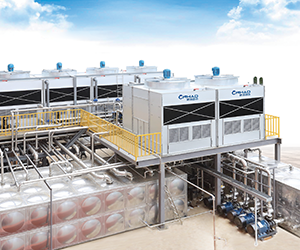
Central chiller plant — the other half of a centralized plant architecture.