





注塑成型用冷却塔:开式与闭式循环、规格选定及如何选择

注塑成型用冷却塔:开式与闭式循环、规格选定及如何选择
The cooling tower is the quiet workhorse behind every water-cooled central chiller and hydraulic cooling loop in a molding plant. Choose the wrong type or size it wrong, and you will pay for it in energy, water, and downtime for years. Here is how to get the decision right.
Almost every molding plant I have visited that runs a water-cooled chiller has a cooling tower sitting outside the plant — a gray box with a fan on top, spinning day and night. Most of the time nobody thinks about it, until the day parts start coming out warped and someone realizes the tower has been silently fouling for a year.
A cooling tower for injection molding removes the waste heat that the chillers and hydraulic systems reject to the atmosphere. It sits at the end of the heat-rejection chain: the mold sheds heat to chilled water, the chiller pumps that heat to condenser water, and the cooling tower finally dumps it into the air. No tower, and a water-cooled system simply cannot work.
Here is the thing: A cooling tower is not glamorous, but it is often the difference between an efficient central cooling plant and a running cost. The tower decides how hard the chiller’s compressor has to work. A well-maintained tower lets the chiller run efficiently; a fouled or undersized tower forces the chiller to work harder and burn more power. Get the tower right, and your whole cooling system runs cheaper.
What is a cooling tower and why does injection molding need one?
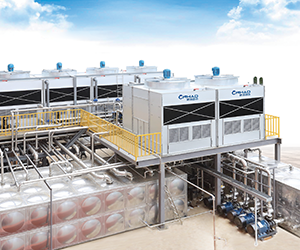
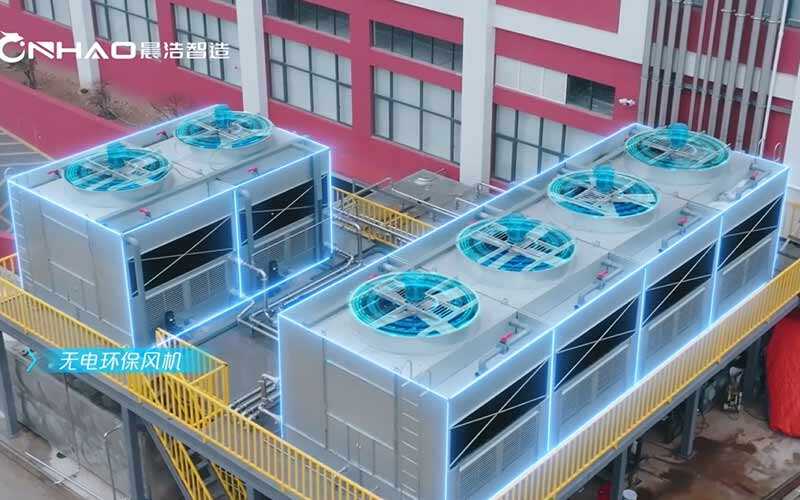
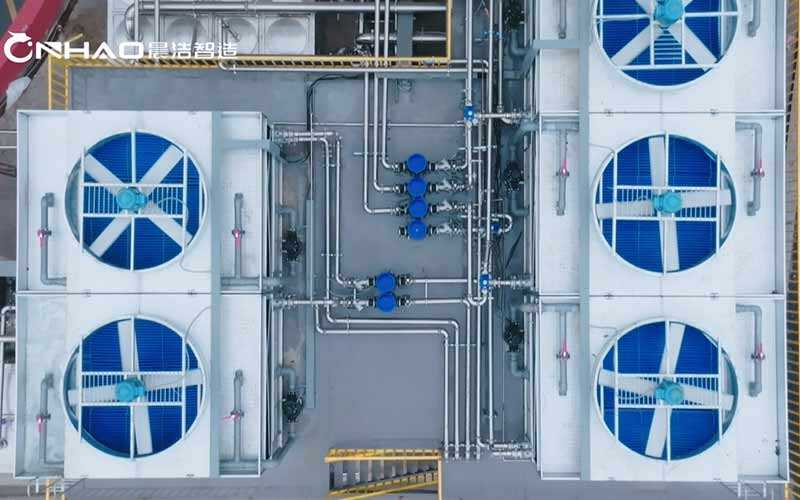
A cooling tower is a heat-rejection device that uses evaporative cooling to remove heat from water. Warm water from the condenser (or from a cooling loop) is pumped to the top of the tower and distributed over packing material, while air is drawn or blown through. A small portion of the water evaporates, absorbing heat and dropping the temperature of the rest. The cooled water falls to the basin and is pumped back into the system.
In injection molding, a cooling tower is essential for any water-cooled chiller. The chiller’s condenser has to get rid of the heat it pulled out of the mold, plus the energy the compressor added. That combined heat — typically 120% to 130% of the cooling load — has to go somewhere. An air-cooled chiller dumps it into hot ambient air with fans; a water-cooled chiller hands it to condenser water, and the cooling tower rejects it by evaporation.
Beyond the chiller, a cooling tower often serves hydraulic oil coolers, compressor cooling loops, and even some mold circuits in warm-weather climates. When you read about a central chiller plant, the cooling tower is the invisible partner that makes its water-cooled efficiency possible.
Open circuit vs closed circuit cooling tower: the key choice
The first and most important decision is whether you need an open-circuit (open loop) or a closed-circuit (closed loop) cooling tower. They look similar on the outside but treat the process water very differently.
| 功能 | Open circuit | Closed circuit |
|---|---|---|
| How water is cooled | Process water itself is sprayed directly over the fill and exposed to air | Process water stays inside sealed coils; separate spray water cools the coils |
| Water cleanliness | Process water picks up dirt, needs treatment and filtering | Process water stays clean, never touches air |
| First cost | 较低 | Higher (roughly 50–80% more for equal capacity) |
| 维护 | Higher — scale, algae, sludge in the loop | Lower — clean process loop, tower water treated separately |
| Best for | Chiller condensers, general plant cooling where water treatment is handled | Clean process water loops, sensitive equipment, poor water quality areas |
For a water-cooled chiller condenser, an open-circuit tower is usually the standard, cost-effective choice — the condenser water is a dedicated loop that you can treat and manage. A closed-circuit tower becomes worthwhile when you need to keep the process water itself perfectly clean, when water quality is poor, or when you want to avoid the water-treatment burden on a sensitive loop.
Cooling tower vs chiller: what is the difference?
This is one of the most common questions I get, and the confusion is understandable because they work together. Put simply:
- A chiller makes cold water. It uses a compressor and refrigerant to pull heat out of the process water, delivering chilled water at, say, 10–15°C to the molds.
- A cooling tower rejects heat. It takes the hot condenser water from the chiller (around 30–35°C) and cools it by evaporation before it goes back to the condenser.
They do completely different jobs. You cannot replace one with the other. If you have read our air-cooled vs water-cooled industrial chiller guide, you will recall that a water-cooled chiller needs a cooling tower, while an air-cooled chiller rejects heat directly with fans and needs no tower. That is the core of the difference: the tower exists to serve the water-cooled condenser.
How to size a cooling tower for injection molding
Sizing a cooling tower comes down to matching its heat-rejection capacity to your plant’s actual load. Here is a practical approach:
- Start from the chiller’s condenser load. A good rule of thumb: the tower must handle roughly 1.25 to 1.3 tons of heat rejection for every ton of cooling the chiller delivers. If you have a 100-ton chiller, plan for a tower sized to reject about 125 to 130 tons of heat.
- Add every other heat load. Hydraulic oil coolers and other cooling loops often share the same tower. List them all before you size.
- Know your design wet-bulb temperature. Cooling capacity falls as humidity rises, because evaporation happens more slowly. Size for the local 1–2% worst-case wet-bulb temperature, not an average day.
- Watch the approach temperature. This is the difference between the cold water leaving the tower and the ambient wet-bulb. A typical design approach is 5–10°F. A smaller approach means colder water but a bigger, more expensive tower.
- Size for peak, not average. Hot afternoons and many presses running at once drive peak demand. Don’t undersize to save money on a tower that then strangles the whole plant.
The mistake I see most: Plants size the cooling tower to match the chiller’s nominal tons and call it done. But the tower also has to reject the compressor’s heat on top of the cooling load, and it must do it on the hottest, most humid day of the year. Undersized towers are the number one reason water-cooled chillers run inefficiently in summer. Do the full heat-load math including the compressor work and the peak wet-bulb conditions.
How a cooling tower saves energy for a molding plant
A cooling tower is not just a necessary cost — done right, it is an energy asset. Here is why:
- Evaporative cooling beats air-cooling in hot climates. Rejecting heat by evaporation can cut chiller energy use by 50–70% compared with air-cooled systems, because the condenser runs at a lower temperature. In places like the Middle East or Southeast Asia, this is decisive.
- Lower condenser temperature means less compressor work. Every degree you can cool the condenser water, the chiller works less. A well-performing tower directly trims the plant’s biggest electrical load.
- Variable-speed fans cut fan power. Cooling towers rarely need full fan speed all year. A variable-frequency drive that follows load can save 20–40% of fan energy at partial load.
- Low fan power per ton. Good towers move a lot of heat for little electricity — typically 0.04 to 0.08 kW per ton of cooling. That is far less than the chiller’s compressor.
Paired with the plant-wide savings of a smart central feeding system and a well-controlled central chiller, an efficient cooling tower is part of the backbone of a low-energy molding operation.
Cooling tower maintenance that keeps it efficient
Most cooling tower problems are slow and silent, and they all end the same way: higher condenser temperature, harder chiller work, and fatter energy bills. A simple maintenance routine prevents this:
- Clean the fill and nozzles. Fouled fill reduces airflow and heat transfer. This is the single biggest cause of tower inefficiency.
- Treat the water. Scale insulates the fill and coils; algae and bacteria clog nozzles and are a health risk. A proper biocide and scale-control program is non-negotiable.
- Check drift eliminators and bleed. Managing cycles of concentration through controlled bleed keeps dissolved solids from building up.
- Inspect fans, motors, and belts. A slipping belt or worn bearing cuts airflow silently. Annual inspections catch it before it costs you a summer.
- Watch the approach temperature. If the tower’s approach climbs over time with no change in load or weather, something is degrading — clean it before the chiller starts paying for it.
Which cooling tower should a molding shop choose?
Here is a practical summary for the average injection molding plant:
- Small to medium shops (up to a few hundred tons of cooling): a counterflow or crossflow open-circuit tower with treated condenser water is usually the right, cost-effective choice.
- Plants that need clean process water or have poor water quality: a closed-circuit tower is worth the higher first cost to protect sensitive equipment and simplify treatment.
- Hot, humid climates: size the tower generously for peak wet-bulb conditions and add variable-speed fans.
- Where precise mold temperature matters: remember the tower serves the chiller, and the chiller serves the mold. For tight process control, pair the tower with the right 模具温度控制器.
Frequently asked questions
Q1: Does every injection molding plant need a cooling tower?
No. Only water-cooled chillers need a cooling tower. If your plant runs air-cooled chillers, they reject heat directly to the air with fans and need no tower. But in hot climates, the water-cooled + tower combination is usually more energy-efficient overall.
Q2: Open or closed circuit cooling tower?
Open circuit is the standard, lower-cost choice for chiller condenser water where you can manage water treatment. Closed circuit keeps the process water clean and reduces treatment needs, at a higher first cost — choose it when water cleanliness or poor water quality matters.
Q3: How big a cooling tower do I need?
Size it to reject roughly 1.25 to 1.3 times the chiller’s cooling capacity (to account for compressor heat), plus any other heat loads, at the local peak wet-bulb temperature. Don’t undersize for peak summer conditions.
Q4: How much energy does a cooling tower use?
Very little compared with the chiller — typically 0.04 to 0.08 kW per ton of cooling for the fans. Variable-speed fans can cut that by 20–40% at partial load.
Q5: What is the biggest cooling tower mistake?
Undersizing it, then letting the fill and nozzles foul. Both force the chiller to run hotter and harder, wasting energy all summer. Size for peak wet-bulb conditions and keep the water treated.
Final thoughts
A cooling tower for injection molding is easy to overlook and expensive to ignore. It sits at the end of the heat-rejection chain, quietly deciding how hard your chillers work and how much power the whole cooling system burns.
The decision comes down to three things: open or closed circuit, right sizing for peak wet-bulb conditions, and disciplined maintenance. Get those right, and the tower becomes a low-cost, low-drama asset that keeps your water-cooled plant running efficiently year after year — and lets you focus on making parts, not fighting heat.
Related reading:
Central chiller for injection molding — how a water-cooled central plant uses a tower.
Air-cooled vs water-cooled industrial chiller — when a tower is needed.
Smart central feeding system — the material-handling half of a modern plant.
Mold temperature controller selection for precise process control.