




Smart Central Feeding System for Plastic Injection Molding: A Complete Guide

Smart Central Feeding System for Plastic Injection Molding: A Complete Guide
A central feeding system quietly decides whether your plant runs clean, consistent, and profitable — or wastes hours every week on material handling, contamination, and inconsistent drying. Here is how a smart central feeding system works and what to look for before you invest.
If you have ever walked a plastic injection molding floor and seen bags of resin stacked against walls, portable dryers humming beside every press, and operators wheeling material from one station to another, you have already seen the problem. The work gets done, but it is slow, dusty, and easy to get wrong. One incorrect material load can ruin a whole run.
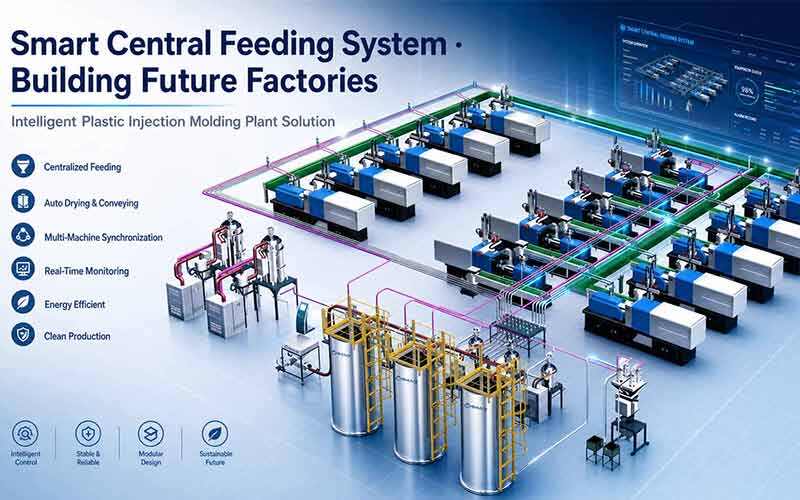
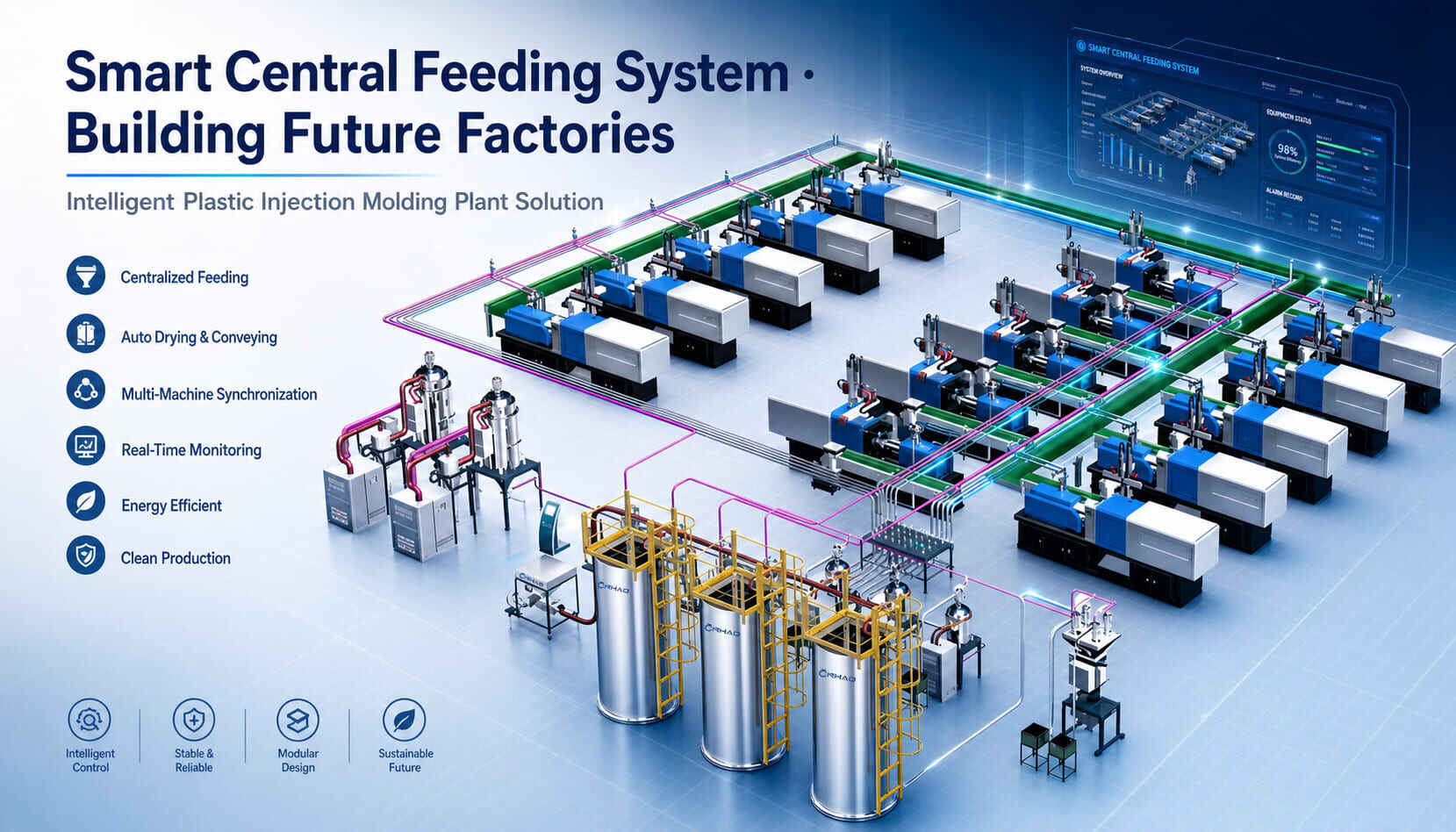
A central feeding system — also called a centralized feeding system, central conveying system, or central material handling system — solves this by moving raw materials from a central storage and treatment area to each machine through a sealed pipeline network. The smart version adds sensors, a central controller, and data visibility so the plant feeds itself while you watch from a screen.
Here is the thing: Central feeding is not just about convenience. It directly affects part quality, scrap rate, energy use, and how much labor you tie up moving resin. In competitive molding, that matters as much as the press itself.
What is a smart central feeding system?
At its core, a smart central feeding system is an automated material supply network for a plastics plant. Pellets or powders are stored in bulk silos or central hoppers, dried and conditioned to the correct moisture level, blended when needed, and then conveyed on demand to each injection molding machine, extrusion line, or blow molding station.
The “smart” part comes from the control layer. A PLC or industrial PC monitors material levels, dryer dew points, conveying pressure, and line status. Operators select recipes from an HMI, and the system opens the right valves, runs the right pumps, and records what went where. When something drifts — low material, blocked line, high moisture — it alarms before scrap starts piling up.
Six advantages that change how a plant runs
Every central feeding system vendor promises efficiency, but the real benefits show up on the floor in six specific ways:
Centralized feeding
One storage and treatment hub serves many machines. Material flows through sealed pipes instead of bags, bins, and forklifts crossing the production floor.
Auto drying & conveying
Resins stay at the target moisture and temperature from central dryers to machine throat. No more inconsistent drying from machine-side units.
Multi-machine synchronization
The controller coordinates demand across all lines, so pumps run efficiently and no machine starves while another over-feeds.
Real-time monitoring
Dashboards show material consumption, dryer status, alarms, and equipment utilization. Problems become visible before they become expensive.
Energy efficient
Shared vacuum pumps, optimized conveying cycles, and settable dew-point dryers cut power use compared to a fleet of standalone loaders and dryers.
Clean production
Closed pipelines keep dust, contamination, and moisture out. The floor stays cleaner, and high-visibility parts are far less likely to suffer defects.
Core components and how they work together
A smart central feeding system is only as good as the integration between its parts. Here is the typical flow:
- Bulk silos or outdoor storage tanks hold large resin volumes away from the production floor. They free up space and reduce how often material has to be moved by hand.
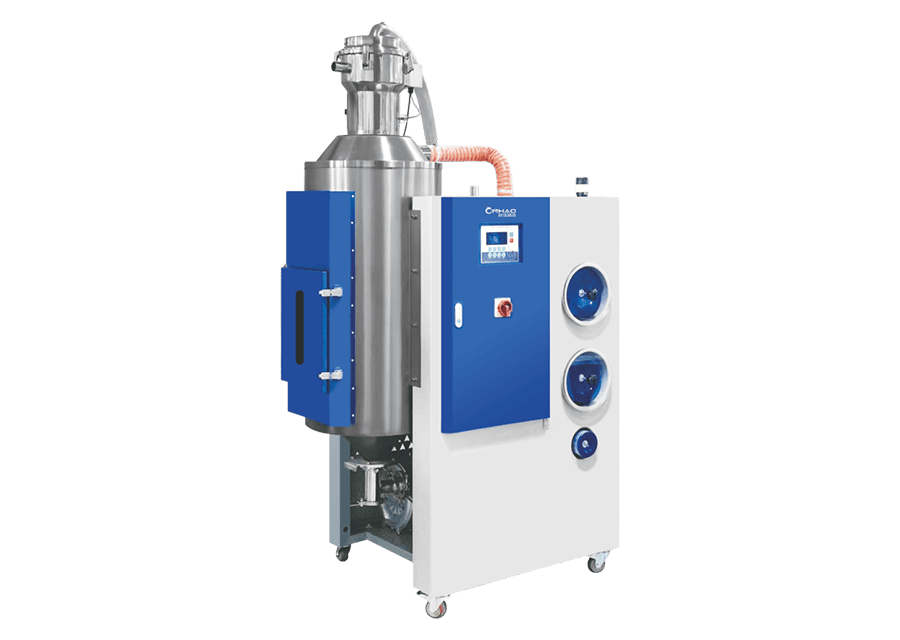
- Central dehumidifying dryers remove moisture from hygroscopic resins like ABS, PC, PA, and PET. A stable dew point — often -40°C or lower — prevents splay, bubbles, and weak weld lines.
- Blenders and dosing units meter color masterbatch, additives, or regrind into the base material with precision. Loss-in-weight models can hit ratios within fractions of a percent.
- Vacuum pumps and receivers create negative pressure to pull material through stainless-steel or anti-static pipelines to each machine.
- Manifolds and automatic valves route the right resin to the right machine. Color-coded lines and software interlocks prevent cross-contamination.
- PLC/HMI and sensors run the schedule, monitor levels and pressure, log alarms, and optionally push data to MES or ERP systems.
The result is a loop: storage → conditioning → conveying → machine → consumption data → back to planning. When it works, operators stop babysitting resin and start managing production.
Where a central feeding system delivers the most value
While any plant with more than a few machines can benefit, the return is strongest in these situations:
- Injection molding: Consistent moisture and color dosing improve cosmetic parts, reduce short shots, and stabilize cycle times.
- Extrusion: Continuous film, pipe, sheet, and profile lines need uninterrupted, conditioned material to avoid thickness variation and line stoppages.
- Blow molding: Bottle and container production relies on steady resin quality and color consistency across long runs.
- Multi-material operations: Plants running many resins or frequent color changes gain the most from automated line routing and purge control.
How to choose and size a central feeding system
Buying the right system means thinking about material, layout, and growth before you think about hardware brands. Use this checklist:
- Map your materials. Pellets, powders, and regrinds behave differently. Note which resins are hygroscopic, which need dosing, and which cannot share lines.
- Calculate total and peak demand. Size receivers, pumps, and dryers for simultaneous machine demand, plus a safety margin for changeovers and future lines.
- Plan pipe routing carefully. Longer runs and sharp elbows reduce conveying efficiency and create angel hair. Use gentle sweeps, proper diameter, and accessible cleanouts.
- Match dryer specs to resin. ABS, PC, PA, and PET have different drying temperatures, dew points, and residence times. A mismatch here guarantees defects.
- Build in line identification and safety locks. Physical color-coding plus software permissions prevent the wrong resin from reaching the wrong machine.
- Choose controls that scale. A good HMI should show alarms, consumption, and trend data. MES/ERP integration becomes valuable once you have multiple lines.
- Leave room to grow. A manifold-based design makes it much easier to add machines later without rebuilding the whole network.
The mistake I see most: Plants size the system for average demand and forget about peak changeovers. When three machines switch colors at once, the conveying load spikes. If the pump and receiver capacity are too small, machines wait for material and cycle times slip.
Common mistakes that waste a central feeding investment
- Undersized dryers. If residence time or dew point is wrong, defects continue no matter how nice the pipeline looks.
- Poor line cleaning strategy. Color changes without automatic purging waste hours and create contamination risk.
- Ignoring material segregation. Virgin, regrind, and color runs need clear routing rules and physical locks.
- Sharp bends and long vertical lifts. These starve lines, increase angel hair, and wear pipes faster.
- No pilot zone. Layout realities — vibration, heat, access — show up only when the system runs. Test one area before full rollout.
ROI and maintenance reality
A well-designed central feeding system is not cheap. A mid-size installation often falls in the USD 50,000–200,000 range depending on machine count, materials, and controls. But the payback usually comes from three places:
- Less scrap: Consistent drying and dosing cut moisture-related and color-related defects. Moving from 6–8% scrap to under 2% pays for a lot of equipment.
- Lower labor: Fewer operators spend time moving bags, loading hoppers, and watching dryers.
- Better floor use and energy: Shared pumps and central dryers are typically more efficient than a scattered collection of machine-side units.
Many plants see payback within one to three years. With routine maintenance — quarterly pump checks, semi-annual filter and valve service, and annual pipe and sensor audits — a system can run for 15 to 20 years.
Frequently asked questions
Q1: What is the difference between a central feeding system and a central conveying system?
The terms overlap. A central feeding system usually refers to the full solution including storage, drying, blending, and distribution. A central conveying system focuses more narrowly on moving material through pipelines. When suppliers say “central material handling system,” they typically mean the integrated plant-wide solution.
Q2: Can one system handle powders and pellets?
Yes, but not always in the same line. Powders need lower conveying velocities, better filtration, and often separate lines to avoid buildup and dusting.
Q3: How many machines can one central feeding system support?
Small systems serve 5–10 machines; large installations serve 50 or more. The limit is usually pump capacity, pipe sizing, and how cleanly you can separate materials.
Q4: Is a smart central feeding system worth it for a small plant?
If you run only one or two machines, standalone loaders and dryers may be more practical. Once you pass about five machines — or run many materials and colors — centralization becomes hard to ignore.
Q5: How does it connect to MES or ERP?
The PLC/HMI can share material consumption, batch data, and alarms over Ethernet. That enables lot traceability, automated reordering, and better production planning.
Related reading:
How to choose an industrial water chiller for efficient process cooling.
Choosing a PET drying system — dew point, time and crystallization explained.
Turnkey plastic auxiliary systems for complete plant equipment.
Related reading:
How to choose an industrial water chiller for efficient process cooling.
Choosing a PET drying system — dew point, time and crystallization explained.
Turnkey plastic auxiliary systems for complete plant equipment.
Final thoughts
A smart central feeding system is one of those investments that changes the character of a plant. The floor gets cleaner, the material gets more consistent, and the people who used to push carts and watch hoppers can focus on making good parts.
The key is to treat it as a plant system, not a collection of boxes. Size it for peak demand, plan the pipe routes like you would plan electrical or water lines, and build in controls that can grow with you. Do that, and a smart central feeding system stops being an expense and becomes the backbone of a modern, efficient molding operation.