






Mold Sweating in Injection Molding: Causes and Fixes


It’s 8:40 on a Tuesday morning in June. Your PC lens mold has stood open for ten minutes while maintenance cleared a stuck runner, and when the gate closes again, the cavity steel is beaded with droplets. The next two hours of parts carry faint circular water marks that quality won’t pass.
Across town, a closure molder logs the same pattern every day: a spike of splay-marked, gas-burned parts during the first hour after startup, then a clean shift. Nobody connected it to the haze of condensation on the core — until the tool came back from the toolroom with rust pitting across three years of mornings. And in a PET preform plant running 9 °C chilled water through 48-cavity tools, operators watch the mold faces fog over during plate-open on humid days.
All three shops are fighting the same enemy and misnaming it. That “leak” you’ve been chasing for three weeks probably isn’t a leak at all.
Mold Sweating Is a Dew Point Problem, Not a Plumbing Problem
Mold sweating — condensation on the mold plates, cavity steel, or cooling connections — happens for one reason: the mold surface temperature has dropped below the dew point of the surrounding air. Water vapor in the shop air then deposits on your coldest surface. It’s the same physics that makes a cold soda can sweat on a picnic table.
Every legitimate fix attacks one of three variables:
- Mold surface temperature — raise it above the dew point, or reduce how far below it sits.
- Dew point of the air — dry the air, and the mold can run colder before it sweats.
- Exposure time — limit how long cold steel faces humid air (startup ramps, shielding).
Understand this triangle and you can evaluate any proposed solution — from a $0 setpoint change to a $40,000 dehumidified enclosure — in ten seconds. If a “fix” doesn’t move one of these three variables, it isn’t a fix.
The Numbers: How Cold Is Too Cold?
Dew point depends on ambient temperature and relative humidity. Here’s what typical shop air can do:
| Shop Air Temp | Relative Humidity | Dew Point | Mold Surface That Will Sweat |
|---|---|---|---|
| 25 °C (77 °F) | 60% | 16.7 °C | Anything below ~17 °C |
| 28 °C (82 °F) | 70% | 22.1 °C | Anything below ~22 °C |
| 30 °C (86 °F) | 75% | 25.1 °C | Anything below ~25 °C |
| 32 °C (90 °F) | 85% | 28.7 °C | Anything below ~29 °C |
Now look at your process. PET preform molding typically wants chilled water at 9–12 °C; optical lenses and many engineering resins run far below ambient too. In a 30 °C / 75% RH shop, a mold face at 18 °C isn’t a borderline case — it’s a condensation generator running at full capacity.
The rule: keep the coldest exposed steel at least 2–3 °C above the dew point. That margin covers real-world humidity swings between morning and afternoon, and between dry and wet season.
You can estimate dew point with the Magnus-type approximation:
γ = ln(RH/100) + (17.62 × T) / (243.12 + T) → Td = 243.12 × γ / (17.62 − γ)
where T is air temperature in °C and RH is relative humidity in percent. A $30 hygrometer on the shop wall plus this formula tells you every morning exactly how cold your mold can safely run today. Most molders never do this calculation once — then spend years paying for it.
What Condensation Actually Costs You
Sweating is not cosmetic. Water on cavity steel causes, in rough order of how fast they appear:
- Water marks and deposit rings on glossy surfaces — instant rejects on lenses, caps, and housings.
- Splay and silver streaks as moisture flashes to steam at the flow front.
- Gas burns at vents from trapped moisture vaporizing during injection.
- Rust and pitting on cavity steel and cooling fittings — the slow-motion tooling killer that degrades finish and eventually cooling performance.
- Corroded O-rings, crusted quick couplings, and mineral deposits that slow every tool change.
Run the morning-window math on a typical line. Say you mold 240 kg of product per hour and the condensation window after each startup lasts 45 minutes. Baseline scrap is 1.5%; during the window it jumps to 6%. That’s 4.5% extra on 180 kg = 8.1 kg per day. At $1.40/kg, that’s roughly $11 per day, $2,800 per year, on one line — from moisture a setpoint strategy or dry-air curtain would have prevented. Add accelerated rust on a $60,000 tool and the number stops being trivial. For how cooling water behavior shapes quality beyond temperature alone, see cooling water in injection molding.
Six Real Fixes, Compared Honestly
| Fix | How It Works | Best For | Cost | Trade-off |
|---|---|---|---|---|
| 1. Raise water temperature | Moves surface temp above dew point | Molds with thermal headroom | $0 | May lengthen cycle; affects dimensions |
| 2. Startup ramp (“warm start, step down”) | Begin warm, lower setpoint after mold stabilizes | Everyday production, morning window | $0 (controls) | Needs a TCU that supports ramping |
| 3. Dry-air curtain / local dehumidification | Blasts low-dew-point air across parting line | PET preforms, lens molds | $ | Energy cost; must cover right zones |
| 4. Full mold enclosure + dehumidifier | Lowers dew point around the tool | Low-temp molds, humid climates | $$–$$$ | Capital cost; maintenance access |
| 5. Plant-wide HVAC dehumidification | Attacks dew point for the whole shop | Many sweating lines at once | $$$ | Highest energy cost, slowest to deploy |
| 6. Insulation and shielding | Reduces exposed cold steel | Complement to fixes 1–5 | $ | Partial only; never a standalone fix |
The order matters. Fixes #1 and #2 are free, and for most general-purpose molding (PP, PE, ABS running 30–60 °C molds) they solve the problem outright. Fixes #3–#5 exist for cases where physics doesn’t give you thermal headroom — and that boundary deserves to be stated plainly.
The Honest Truth: When You Don’t Need the Expensive Fix
If your molds run warm — PP tubs, PE closures, most packaging — you may never see mold sweating, because your surface temperature sits above the dew point year-round. Don’t buy equipment for a problem you don’t have.
If air conditioning holds your shop below ~24 °C and 55% RH, your dew point is around 14–15 °C, and a modest setpoint bump handles nearly everything.
If you run PET preforms, optical lenses, or any process genuinely requiring 10–15 °C mold temperatures in a humid climate, no setpoint cleverness will save you. At 32 °C and 85% RH, the dew point is 28.7 °C while your mold must sit at 12 °C. Only dry air (fix #3 or #4) closes that gap — it’s the one lever that moves dew point down instead of forcing temperature up. This is exactly why low-temperature chilled water systems carry specific design requirements; see why precision molding requires low-temperature chilled water.
Knowing which camp you’re in takes 15 minutes with a hygrometer — and it’s the difference between a $0 fix, a $5,000 fix, and a $40,000 fix.
Why This Is Really a Water System Design Decision
Here’s where the single machine plugs into the bigger picture. Mold sweating is often created — or cured — at the plant water system level:
- Dual-temperature loops. A well-designed central plant supplies two chilled water circuits — say 9 °C for PET and 15–18 °C for general molds — instead of forcing every machine to drink the coldest water you make. One loop sized for your most demanding process engineers condensation into every other mold in the building. Design principles are covered in our central chiller plant guide.
- Free cooling in shoulder seasons. Ambient free cooling saves energy in winter — until it overcools the loop in spring and your molds start sweating in April. The control strategy needs a temperature floor, not just a ceiling.
- Sizing and turndown. An oversized chiller hunting at low load delivers unstable water temperature; unstable temperature plus humid air equals intermittent, mysterious sweating. Get this right at specification with a proper chiller sizing exercise.
- TCU strategy at the machine. A temperature control unit with programmable ramping and multiple setpoints gives you the “warm start, step down” fix for free. Our TCU selection guide covers what to look for — and in the water vs. oil temperature control debate, note that oil loops typically run warmer and sweat less for the same mold temperature.
A shop fighting condensation machine-by-machine is usually seeing a symptom of a plant water system that was never designed around dew point. The mold temperature controller is the frontline instrument, but the strategy lives upstream.
Common Mistakes We See on Shop Floors
- Chasing a nonexistent leak for weeks. If droplets appear but circuit pressure holds steady, you have condensation, not a leak.
- Slamming cold water into a dry mold at startup. The mold stays above dew point for exactly as long as it takes to cool — then the sweating starts. A 15-minute ramp avoids both in one move.
- Blasting compressed air at the parting line. It displaces humid air for a few seconds, often carrying oil and its own moisture. It masks symptoms and does nothing the rest of the shift.
- Wiping the mold and calling it handled. The moisture that matters — the micro-layer condensing during every plate-open — was never wipeable.
- Ignoring the wet season. A setpoint safe in January (dew point 5 °C) sweats in July (dew point 26 °C). Treat setpoints as seasonal, or automate the margin with a dew point sensor.
- Letting condensation sit on tooling overnight. Overnight rust does more cumulative damage than anything during production. Dry the tool at shutdown.
- No shop-floor humidity monitoring. A $30 hygrometer and a taped-up note listing today’s maximum safe mold temperature would prevent most of the above.
Your Inquiry Checklist
When specifying a chiller, TCU, or central system for a humid climate, put these questions on the table:
- What is my worst-case seasonal dew point, and what mold temperatures will my processes require then?
- Does the system support dual-temperature loops, or does every machine inherit the coldest loop temperature?
- Do the TCUs support programmable startup ramps and multiple setpoints per zone?
- What is the temperature stability (±°C) at low load, not just at full load?
- If free cooling is included, is there a minimum loop temperature floor?
- What would dry-air curtains or an enclosure cost per machine, versus my calculated condensation scrap cost?
- How will the system integrate dew point sensing — or at minimum, seasonal setpoint schedules?
- Who owns the morning-startup procedure, and is it written down?
Vendors who answer these fluently have seen this problem before. Vendors who change the subject haven’t.
Frequently Asked Questions
Is mold sweating dangerous for the mold, or just for part quality?
Both. Short term, it creates water-mark and splay rejects. Over months, it rusts cavity steel, pits polished surfaces, corrodes fittings and O-rings, and degrades the cooling performance that caused it. The tooling damage is usually the bigger cost.
What’s the fastest fix I can apply tomorrow morning?
Check the dew point with a hygrometer. If your water temperature sits within 3–5 °C of it, raise the setpoint slightly and re-check scrap. It costs nothing and resolves most general-purpose cases. The wider defect context is in our injection molding defects guide.
Why does mold sweating get worse in summer?
Warmer air holds dramatically more moisture. Going from 25 °C/60% RH to 32 °C/85% RH moves the dew point from about 17 °C to about 29 °C — a mold that was safe all winter now sweats constantly.
My PET preform molds sweat even at moderate humidity. What should I do?
PET preform cooling demands 9–12 °C water, below the dew point of almost any non-conditioned shop. Here, dry-air curtains or an enclosure isn’t optional — it’s the only lever that moves dew point instead of mold temperature.
Does mold sweating mean my chiller is set too cold?
Not necessarily. It means your chiller temperature, process requirements, and shop dew point are in conflict. Sometimes warmer water is the answer; sometimes the process genuinely needs cold water and the answer is drier air. Diagnose with the dew point number, not by assumption.
Can insulation plates stop mold sweating?
They reduce exposed cold steel and help at the margins, especially on platens and non-cavity surfaces. But they can’t protect cavity faces, where condensation does the damage. Treat insulation as a complement, never a cure.
The Bottom Line
Mold sweating is one of the few molding problems with a clean, calculable answer: measure your dew point, know your mold surface temperature, and keep at least a 2–3 °C margin between them. For most molders the fix is free — a setpoint, a ramp, and a $30 hygrometer. For low-temperature processes in humid climates, the honest answer is dry air. And if the problem appears across multiple machines, stop solving it press-by-press: it’s a plant water system design question, and it deserves a system-level answer.
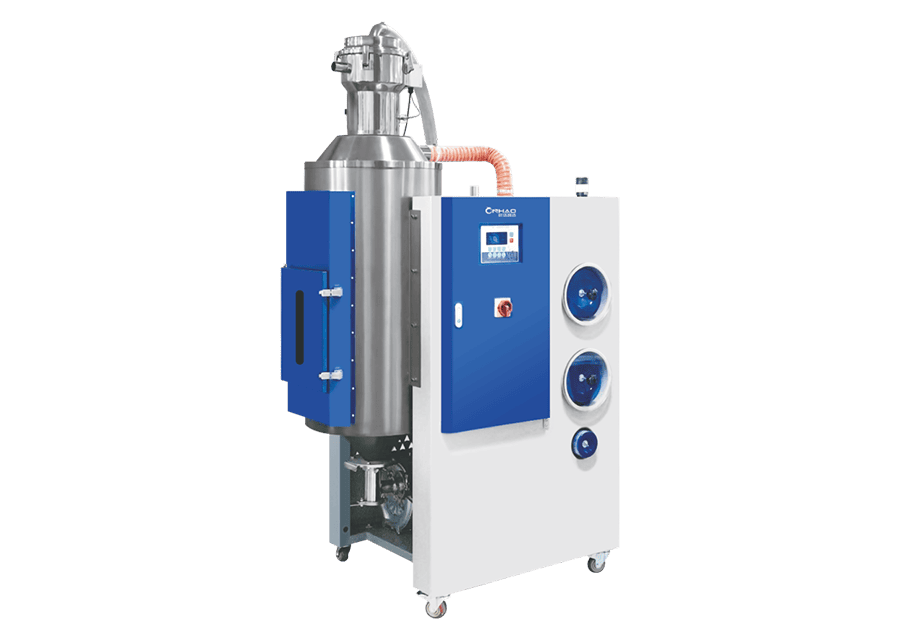
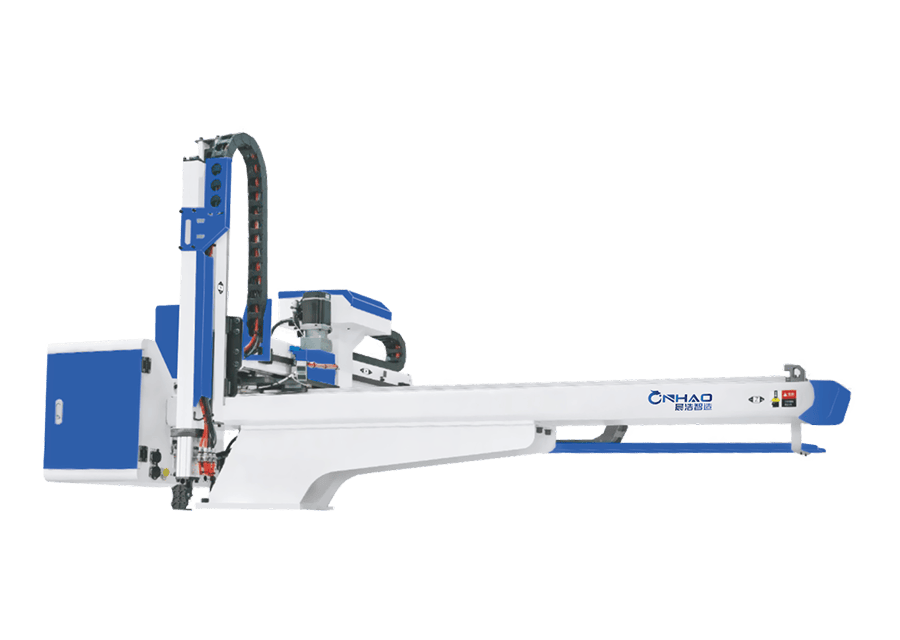
For a broader map of how chillers, TCUs, dryers, and conveying systems fit together in a modern plant, start with our complete guide to plastic auxiliary equipment.