






Injection Molding Plant Energy Audit: A Practical Guide

Quick Answer
A plant energy audit is a metered, system-by-system review of where every kWh in an injection molding plant goes. Typical plants run 0.9–1.4 kWh per kg of good parts. Optimized plants reach 0.55–0.75 kWh/kg. An audit needs one to two weeks of sub-metering and typically uncovers 15–30% savings in drying, chilled water, and compressed air.
Key Takeaways
- Benchmark first: world-class plants mold at 0.55–0.75 kWh/kg; unoptimized plants burn 0.9–1.4 kWh/kg.
- Dryers dominate auxiliaries: resin drying alone can consume 15–25% of plant electricity.
- Meter by system: sub-meter presses, dryers, chilled water, and compressed air before drawing conclusions.
- Central systems win at scale: one central chiller plant usually beats many small chillers above roughly 15 machines.
- Audit yearly: re-run the energy audit every 12 months and after any major equipment change.
- Savings fund upgrades: a documented 20% energy cut often pays for a central system upgrade within two years.
Three Plants, Same Blind Spot
Scenario one: a plant manager watches the electricity bill climb 18% in six months while shipped tonnage stays flat. Nobody can say which system consumed the extra kWh.
Scenario two: a new PET line comes online, and dryers plus chillers now run through weekends. Energy per kilogram creeps from 0.85 to 1.10 kWh/kg. Quotes built last year stop making margin.
Scenario three: a quoting engineer uses 0.7 kWh/kg in the cost model because a trade article said so. Finance measures 1.2 kWh/kg from actual bills. That gap erases the profit on a 400-ton packaging program.
All three plants share one blind spot. They buy electricity as a single number and never split it by system. That is exactly the problem an energy audit exists to fix.
What a Plant Energy Audit Actually Is
A plant energy audit is a metered accounting of electricity across every system in a molding plant. It answers three questions with data instead of opinion: where does the energy go, what does each kilogram of good output cost, and which fix pays back fastest.
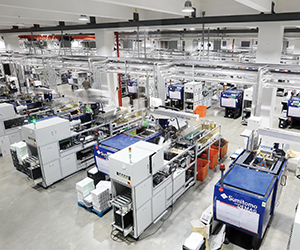
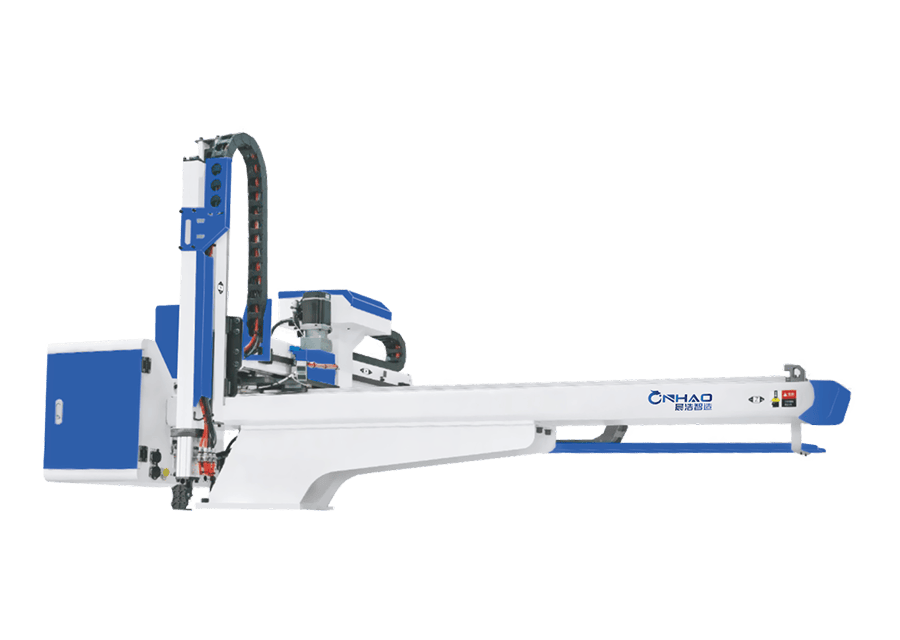
Auxiliary systems deserve the closest look. Presses are visible and already monitored. Dryers, chillers, mold temperature controllers, and conveying blowers run quietly in the background. Together they often account for 40–60% of the bill. Streamline Eco Tech sizes these utilities as one integrated plant rather than isolated machines, because that is where audits keep finding the money.
Where the Energy Actually Goes
Every molding plant distributes electricity differently, but the pattern below repeats across hundreds of walk-throughs. Use it as a sanity check against your own sub-metered data, never as a substitute for it.
| System | Share of Plant Electricity | Typical Waste Signals |
|---|---|---|
| Presses (hydraulics, heaters, barrels) | 45–60% | Barrel heaters on all weekend, pump motors never idle |
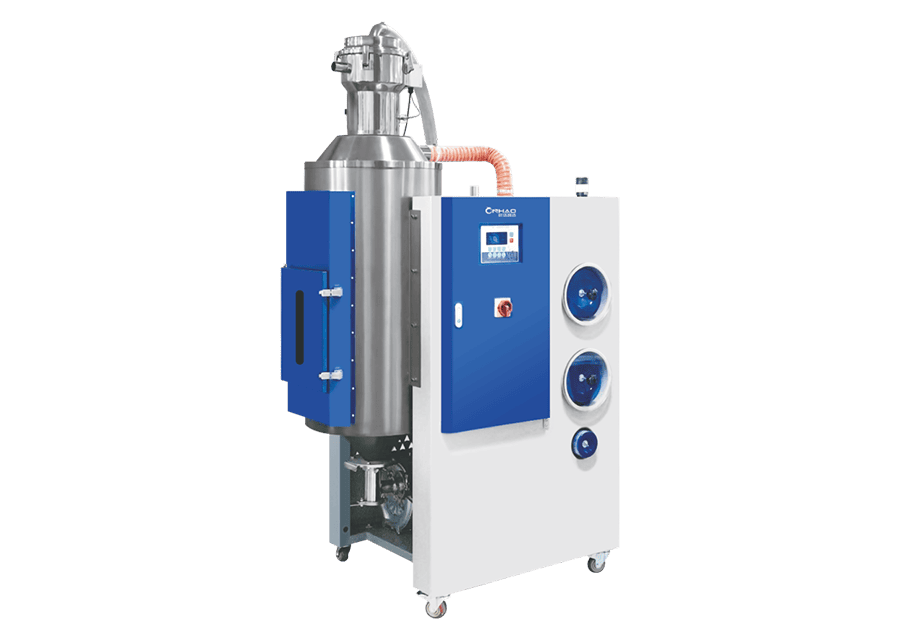
| Resin dryers (desiccant heaters, blowers) | 15–25% | One drying recipe applied to every material |
| Chilled water (chillers, towers, pumps) | 10–20% | Fixed 10°C setpoint year-round, bypass valves open |
| Compressed air (conveying, actuators) | 5–10% | Unmetered leaks, conveying on continuous mode |
| Conveying and feeding blowers | 3–6% | Vacuum blowers sized for peak, running 24/7 |
| Mold temperature controllers | 2–5% | Oversized pumps, heating when cooling is needed |
Read the table as a ranking of audit attention, not a rule. A plant molding PET at 500 kg/h will lean heavily toward drying. A plant running engineering resins on 60 presses will lean toward chilled water. The audit tells you which column owns your money.
Mold temperature controllers illustrate how systems interact inside an energy audit. The controller itself draws little power, but every degree it holds comes from the chilled water or heating loop it feeds. Meter only the controller and you miss the load it creates elsewhere. Compressed air hides waste the same way: unmanaged plants lose 20–30% of compressed air output to leaks, and ultrasonic detection on a quiet Sunday routinely finds losses worth thousands of dollars a year.
The Arithmetic That Settles Arguments: kWh per kg
Plant disputes about energy end with one number: kWh per kg = total plant electricity ÷ kilograms of good parts. Good parts means salable output only. Scrap, purgings, and start-up material are excluded from the denominator but their electricity stays in the numerator. That is intentional: waste should hurt the metric so fixing it shows up.
Worked example one — the whole-plant baseline. A 24-press plant pulls 1,040,000 kWh in a month and ships 950,000 kg of good parts. The math: 1,040,000 ÷ 950,000 = 1.09 kWh/kg. At an $0.11/kWh tariff, energy alone costs $0.12 per kilogram. On thin-margin commodity parts, that line decides whether the plant makes money.
Worked example two — the drying sub-audit. A PET line molds 500 kg/h while its crystallizing and drying line draws 210 kW. Drying energy: 210 ÷ 500 = 0.42 kWh/kg, nearly 40% of a world-class total plant budget. After right-sizing the dryer, tightening the dew point control, and recovering heater exhaust, the same line draws 140 kW: 140 ÷ 500 = 0.28 kWh/kg. That single fix returns 0.14 kWh/kg on every kilogram molded. Our PET crystallization and drying line guide walks through the full sizing logic behind those numbers.
Run the same division for each sub-metered system and the audit stops being an opinion and becomes a ledger.
Central Chilled Water or Individual Chillers?
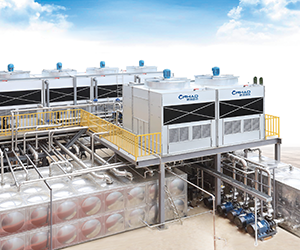
Chilled water is the utility where audit findings most often change the plant layout. The choice between one central plant and many small chillers is a scale decision, not a taste preference. Streamline Eco Tech engineers both, and the honest answer depends on machine count.
| Factor | Central Chiller Plant | Individual Chillers at Press |
|---|---|---|
| Full-load efficiency | 0.55–0.75 kW per ton | 0.85–1.1 kW per ton |
| Capital cost | Higher upfront, needs piping | Lower per machine, easy to phase |
| Redundancy | N+1 configuration is simple | Each press is a single point of failure |
| Maintenance | One mechanical room, one crew | Dozens of units scattered plant-wide |
| Part-load behavior | Staging and VFDs track demand | Units cycle or short-cycle at night |
| Best fit | 15+ presses, stable load profile | Fewer than 10 presses, phased growth |
Above roughly 15 machines, the central chiller plant usually wins on efficiency, redundancy, and maintenance alone. Below 10 machines, individual chillers are the rational choice, and pretending otherwise wastes capital. For deeper detail, see our central chiller plant guide and the air-cooled vs water-cooled chiller comparison.
Run the Audit in Five Steps
- Pull 12 months of data. Gather utility bills and good-part kilograms by month. Compute kWh/kg for each month and chart it. The trend line is your baseline.
- Sub-meter by system. Meter press halls, dryers, chilled water, compressed air, and conveying separately for at least two full weeks. Clamp-on meters are enough for a first pass.
- Walk the plant at idle. Visit on a Sunday. Record what still runs: barrel heaters, dryers at full temperature, chillers with no load. Weekend standby alone can reach 10–15% of the bill.
- Match each load to a fix. Right-size the dryers, stage the chilled water, add VFDs to blowers, repair air leaks, and shut down true idle loads. Rank fixes by payback, not by popularity.
- Re-measure and keep the metric. After changes, repeat the sub-metering for two weeks. Then keep monthly kWh/kg on the plant dashboard so drift becomes visible within weeks, not years.
When the Cheap Answer Is the Right Answer
Not every plant needs a central system, and an honest audit will sometimes tell you to spend less, not more. Running fewer than 10 presses on single shift? Individual chillers and hopper dryers are rational. Molding commodity PP that dries in two hours? A basic hot-air setup beats a premium desiccant unit on payback. Phasing in capacity year by year? Buying oversized utilities now means paying for efficiency you cannot yet use.
The audit exists to protect you in both directions: from wasting money on prestige equipment, and from bleeding money through unmeasured waste. Any supplier who recommends a central plant before seeing your sub-metered data is selling, not engineering. Ask for the load profile first.
Common Audit Mistakes
- Metering only the main feed, then guessing how it splits across systems.
- Dividing electricity by shipped weight that includes scrap, flattering the metric.
- Running every resin at PET drying settings because one recipe was easier.
- Holding chilled water at 10°C year-round when most molds run fine at 14–16°C.
- Optimizing one press while the central utilities quietly leak value all shift.
- Treating the audit as a one-time project instead of a monthly metric.
- Buying efficiency equipment with no metered baseline, so savings can never be verified.
What to Prepare Before You Inquiry
When you contact Streamline Eco Tech about plant utilities, bring these eight numbers. A prepared inquiry shortens engineering from weeks to days:
- Monthly plant kWh and monthly good-part kilograms, ideally 12 months.
- Press count and tonnage range, plus planned additions within 24 months.
- Materials processed, with drying temperature and duration requirements.
- Current chilled water arrangement: central, individual, or mixed.
- Conveying method: compressed air, vacuum blower, or central feeding.
- Layout constraints: mechanical room space, roof access, pipe routing.
- Target kWh/kg and the payback period your finance team requires.
- Whether phased implementation is required for cash-flow reasons.
FAQ
What is a plant energy audit in injection molding?
It is a metered, system-by-system review of electricity use across presses and auxiliary utilities. It converts one opaque bill into a ranked list of fixes with payback periods.
How much energy does injection molding use per kg?
Typical plants consume 0.9–1.4 kWh/kg of good parts. Well-optimized plants reach 0.55–0.75 kWh/kg, mainly through better drying, chilled water, and standby control.
How do I calculate energy cost per kg of molded parts?
Divide total plant kWh by kilograms of good parts, then multiply by your electricity tariff. Example: 1.09 kWh/kg × $0.11 = $0.12 per kilogram.
How often should we run an energy audit?
Run a full audit every 12 months, plus a quick re-check after adding presses, dryers, or chillers. Track kWh/kg monthly in between.
Central chilled water or individual chillers — which saves more energy?
Above roughly 15 machines, a central chiller plant usually saves more through 0.55–0.75 kW-per-ton efficiency, staging, and N+1 redundancy. Below 10 machines, individual chillers are usually the better buy.
Why is my plant’s energy cost per kg rising?
The usual causes are weekend standby loads, one oversized drying recipe, and drifting chilled water setpoints. Sub-metering for two weeks identifies which one owns your losses.
The Bottom Line
You cannot manage a number you never measure. A plant energy audit replaces guesswork with a ledger: one kWh/kg figure for the plant, one for each utility, and a ranked list of fixes. Plants that adopt the metric routinely find 15–30% savings hiding in dryers, chilled water, and standby power. Whether the answer is a turnkey auxiliary system or simply better setpoints, the audit tells you before you spend.
Streamline Eco Tech audits and engineers plant utilities as one system — drying, chilled water, conveying, and blending sized together, not in silos. Start with our complete guide to plastic auxiliary equipment, or send the eight numbers above and we will map your kWh/kg gap. For dosing-level precision, see our masterbatch doser calibration guide.
Reviewed by Howard, 15 years in plastics auxiliary systems engineering, Streamline Eco Tech.